Monday, September 25, 2006

Mainoo Dukh Aavay

Waheguru Ji Ka Khalsa Waheguru Ji Ki Fateh

One time, a rich couple invited Sri Maan Sant Gyani Baba Kartar Singh Ji and the rest of the jatha for langar. Both were very religious. They had been married for many years but had no children.

After langar Sant Ji stood up to do ardaas and asked the family if they had any wishes. Singh did not say anything but his wife said “Mainoo dukh aavay (I wish to spend my life full of sorrow).”
Sant Ji smiled and did the ardaas. After leaving their house some singhs asked Sant Ji the meaning of doing such ardaas of asking for sorrow and pain.
Sant Ji said “When people are happy they never remember Guru Ji. Only when they are in trouble, pain or suffer remember Guru Ji and do ardaas. The purpose of bibi’s ardaas asking for sorrow was just one way to remember Guru Ji. She does not want such happiness that would make her forget about true Guru Ji. She rather have sorrow and pain, this way she will always remember Guru Ji. But know one thing; the sorrow she asked for will bless her with true happiness of Sikhi. So do as much simran and read as much Bani as possible, who knows one day Guru Ji might do kirpa and bless you with the same sorrow bibi ji asked for.”
May Maharaj bless the whole world with such Dukh.

Waheguru Ji Ka Khalsa Waheguru Ji Ki Fateh

Wednesday, September 20, 2006

Keep in mind

Waheguru Ji Ka Khalsa Waheguru Ji Ki Fateh
"If you wish to deal in matters of the Faith, {Keep in mind that} if Sukha Singh and Mehtab Singh had come to Punjab to file a suit in order to catch Massa Ranghar, he would never have been caught.

If Baba Deep Singh Ji had sought writis {of the courts } from here, The Haidari Flag - of Afghans - would never have come down from Harminder Sahib.

If Bhai Banda Singh Bahadhur had consulted with commissioners and lawyers, it is certain that Wazir Khan would never have been captured."

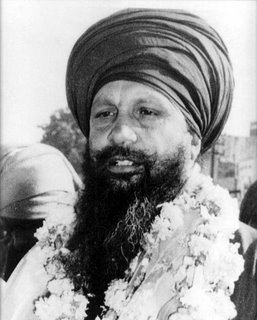
Sri Maan Sant Gyani Baba Jarnail Singh Ji Khalsa Bhindranwale, 1982

Sometimes picking up the sword is the only way left.

Waheguru Ji Ka Khalsa Waheguru Ji Ki Fateh

Monday, September 18, 2006

Sant Baba Bishan Singh Murewale and Sant Baba Sundar Singh Ji's Dib Drishtee

Waheguru Ji Ka Khalsa Waheguru Ji Ki Fateh

One time Sri Maan Sant Baba Bishan Singh Ji Muralewale the 10th jathedhar of Satguru Sri Guru Gobind Singh Ji’s Taksal was walking and he came across one of his students Sant Baba Sundar Singh ji who was doing tapasaya in kapli asan (posture)
Sant Ji’s head was on the floor towards the earth and his feet were high in the air cross legged.

Sant Baba Bishan Singh Ji Muralewale asked Sant Baba Sundar Singh Ji, ‘what are you doing?’
Sant Baba Sundar Singh Ji replied, ‘I don’t know what to do, but wherever I look I see Satguru Sri Guru Nanak Dev Ji Maharaj. Which ever direction I put my feet in, there I see Guru Nanak Dev Ji. I don’t know where to put my feet, so I sit in this position’.
Sant Baba Bishan Singh Ji Muralewale replied, ‘Dhan Dhan Sri Guru Nanak Dev Ji Maharaj is extremely pleased by your recitation of Sri Jap ji sahib and your Dib Drishtee(celestial vision) has fully opened.'

Waheguru Ji Ka Khalsa Waheguru Ji Ki Fateh

Thursday, September 14, 2006

Bhagat Sain Ji and King Raja Ram

Waheguru Ji Ka Khalsa Waheguru Ji Ki Fateh
Bhagat Sain was a disciple of Bhagat Ramanand and consequently lived in the end of the fourteenth and the beginning of the fifteenth century of the Christian era. He was a barber at the court of Raja Ram, king of Rewa, then called Bandhavgarh. The tendency of the age was towards devotion and religious composition, and Sain found leisure in the midst of duties to study the hymns of Ramanand, shape his life on the principles inculcated in them, and successfully imitate their spirit and devotional fervour.
The accomplishments and duties of an Indian court barber at the time of Sain were and are still of a miscellaneous character. He is something of a surgeon and ordinarily a marriage or match-maker, he oils the king’s body, shampoos his limbs, pares his nails, shaves his face and head, if he be a Hindu, and clips his moustaches, if he be a Musalman; amuses him with gossip and tales; often plays the rebeck and sings his own compositions, which deftly combine flattery of his master with social satire or pleasentry.
God is said by the Hindu chronicler to have cherished Sian as a cow her calf. He frequented the society of holy men and was very happy in their company. He performed for them all menial officies, for he believed that serving saints was equivalent to serving God himself.
The Bhagat Mal contains a legend which at once illustrates Sain’s devotion to saints and the estimation in which he was held for his piety.
Bhai Gurdas Ji has also recorded this sakhi in his Waars:

sux prqwp kbIr dw dUjw isK hoAw sYx nweI]
sun parathaap kabeer dhaa dhoojaa sikh hoaa sain naaee
Hearing of glory of Kabir, Sain also turned to be a disciple.

pRym Bgiq rwqIN krY Blky rwj duAwrY jweI]
praem bhagath raathee(n) karai bhalakae raaj dhuaarai jaaee
In the night he would immerse in loving devotion and in the morning he would serve at the door of the king.

Awey sMq prwhuxy kIrqn hoAw rYx sbweI]
aaeae sa(n)th paraahunae keerathan hoaa rain sabaaee
On one night some sadhus came to him and the whole night was spent in singing the Lord's praises

Cf n skY sMq jn rwj duAwr n syv kmweI]
shhadd n sakai sa(n)th jan raaj dhuaar n saev kamaaee
Sain could not leave company of the saints and consequently did not perform the king’s service the following morning.

sYx rUp hir hoiekY AwieAw rwxy noN rIJweI]
sain roop har hoeikai aaeiaa raanae no(n) reejhaaee
God himself took the form of Sain. He served the king in such a way that the king was overjoyed.

swD jnW noN ivdw kr rwjduAwr gieAw SrmweI]
saadhh janaa(n) no(n) vidhaa kar raajadhuaar gaeiaa sharamaaee
Bidding fairwell to the saints, Sain hesitantly arrived at the palace of the king.

rwxy dUrhuM sdkY glhuM kvwie KolH pYnHweI]
raanae dhoorahu(n) sadhakai galahu(n) kavaae kholh painhaaee
The king From a distance the king called him nearby. He took off his own robes and offered them to Bhagat Sain.

vs kIqw hauN quD Aj bolY rwjw suxY lukweI]
vas keethaa hou(n) thudhh aj bolai raajaa sunai lukaaee
‘You have overpowered me’, said the king and his words were heard by one and all.

prgt krY Bgq vifAweI ]ñö]
paragatt karai bhagath vaddiaaee aa
God himself manifests the grandeur of the devotee.
When going one day to perform his usual ministrations for King Raja Ram, he met some holy men on the way. He thought it was his first duty to attend to them, He took them with him, and began to render them with the customary services. With the greatest mental satisfaction to himself he gave them consecrated and secular food to relieve their souls and bodies. In acting this way Sain disregarded his duty to the king and braved his displeasure.
The legend states that God himself, in order to avert the king’s wrath and save Sain from punishment, assumed his appearance, and having gone and performed the customary duties for the king, took his departure. Soon after Sain arrived and began to apologise for the delay.
The king said, “You have only just gone after the usual services to me; why apologise?”
Sain replied, “ I have not been here. Perhaps your majesty says this so to excuse my absence.”
The Raja then knew that a special providence had intervened and performed for him the usual tonsorial duties.
He uttered the words, "You have overpowered me" and was at once converted, fell at Sain’s feet, worshipped him as his guru, and thus sought an asylum in Akaal Purakh.
Waheguru Ji Ka Khalsa Waheguru Ji Ki Fateh

Wednesday, September 13, 2006

Sudama and Krishna

Waheguru Ji Ka Khalsa Waheguru Ji Ki Fateh
This sakhi is narrated by Bhai Gurdas Ji in his vaars as follows:

ibp sudwmw dwldI bwl sKweI imqR sdwey]
bip sudhaamaa dhaaladhee baal sakhaaee mithr sadhaaeae
Sudama, a poor brahman, was known to be a friend of Krishna from childhood.

lwgU hoeI bwmHxI iml jgdIs dildR gvwey]
laagoo hoee baamhanee mil jagadhees dhalidhr gavaaeae
His brahmin wife always pestered him as to why he did not go to Lord Krishna to alleviate his poverty.

cilAw igxdw gtIAW kÎoN kr jweIey kOx imlwey]
chaliaa ginadhaa gatteeaaa(n) kao(n) kar jaaeeeae kaan milaaeae
He was perplexed and pondered over how he could get re-introduced to Krishna, who could help him meet the Lord.

phuqw ngr duAwrkw isMG duAwr Kloqw jwey]
pahuthaa nagar dhuaarakaa si(n)gh dhuaar khalothaa jaaeae
He reached the town of Duaraka and stood before the main gate (of the palace of Krishna).

dUrhuM dyK fMfauq kr C`f isMGwsx hir jI Awey]
dhoorahu(n) dhaekh dda(n)ddouth kar shhaadd si(n)ghaasan har jee aaeae
Seeing him from a distance, Krishna, the Lord, bowed and leaving his throne came to Sudama.

pihly dy prdKxw pYrIN pY ky lY gl lwey]
pehilae dhae paradhakhanaa pairee(n) pai kae lai gal laaeae
First he circumambulated around Sudama and then touching his feet he embraced him.

crxodk lY pYr Doie iSMGwsx aupr bYTwey]
charanodhak lai pair dhhoe shi(n)ghaasan oupar bait(h)aaeae
Washing his feet he took that water and made Sudama sit on the throne.

puCy kusl ipAwr kr gur syvw dI kQw suxwey]
pushhae kusal piaar kar gur saevaa dhee kathhaa sunaaeae
Then Krishna lovingly enquired about his welfare and talked about the time when they were together in the service of the guru (Sandipani).

lYky qMdl cibEn ivdw kry Agy phucwey]
laikae tha(n)dhal chabioun vidhaa karae agae pahuchaaeae
Krishna asked for the rice sent by Sudama’s wife and after eating, came out to see off his friend Sudama.

cwr pdwrQ skuc pTwey ]ù]
chaar padhaarathh sakuch pat(h)aaeae a
Though all the four boons (righteousness,wealth,fulfillment of desire and libereation) were given to Sudama by Krishna, Krishna's humbleness still made him feel totally helpless.
Sudama was born in a Brahmin family and raised in abject poverty. He was a childhood friend of Krishna. He had the supreme knowledge as well as superb control over his senses. Despite being poor, he was content with what he had but his wife Susheela was frustrated.
One day, unable to control her hunger, she told Sudama: "Krishna is your fast friend. Why don't you go to Him? When He comes to know about our harships, He will certainly come to our aid".
Sushila thus requested him several times. Finally, Sudama thought: 'Though I am facing the problem of poverty, it will be only an excuse to meet Krishna, as I only want to have His sight'. Thinking thus, Sudama asked his wife to get something which he could present to Krishna. At that time, there was not even a grain of rice in their home. So, Susheela borrowed four handfuls of parched rice from her neighbour. Tying it in a bundle, she handed it to Sudama. Sudama at once set out for Dwarka. On the way, he was wondering about whether he would be able to recognize Krishna. Though they had been together in the Gurukul (school), but it was long ago.
Krishna and Sudama studied together at sage Sandipani's Gurukul. Finishing his education in a short time, Krishna came to Dwarka and became the king. On the other hand, Sudama too returned to his native place and started his married life. It would be their first meeting ever since they had left Sandipani's Gurukul. Would Krishna remember him or not?
Throughout the journey, he pondered over the same dilemma. Reaching Dwarka, he sent information to Krishna about his arrival and as soon as Krishna heard about Sudama's arrival, He came running to him and embraced him. The mere touch of Krishna's body was a transcendental experience for Sudama.

Krishna escorted Sudama to His private chamber in the palace and offered him a seat and began to wash his feet. He pitied Sudama's condition. When He held Sudama's feet, tears rolled down Krishna's cheeks. Sudama's feet were washed by Krishna's tears. Seeing Krishna's condition, the queen Rukmani too washed Sudama's feet. Krishna then sprinkled the residual water over His head. Krishna then bedecked Sudama with scented flowers, sandal, Durva grass, Dhoop, Deep, garlands etc. He also offered him royal food to eat, then got his mouth and hands washed. Thereafter, He offered him betel leaves, nuts etc. to freshen his mouth.
Thus eating to his fill, Sudama sat near Krishna chatting. All the queens of Krishna began to fan him. Krishna too sat near him, holding his hand and chatting. Krishna said to Sudama: "Friend, I know that even living under abject poverty, you have never longed for luxuries. People like you are indeed rare who remember me and recite my name selflessly. Friend, you will recall the time when we were together in the Gurukul. You may also recall the day, when we had left the Gurukul and obeyed our teacher's orders to go to the forests and collect wood for fuel. We were then caught in a heavy storm. It was dark all around even before sunset and with water everywhere all round, we were therefore forced to spend the night in the forest. At sunrise, when Guru Sandipani came to know about us, he had himself arrived in the forest. Seeing us, he had said: "Sons, you have borne a lot of suffering for me. Everyone wants to protect himself, but without caring for yourselves, you have served me. I am very pleased with you. May all of your desires and ambitions be completed".
"O friend, it is by the grace of the teacher that a human being gets peace and all the luxuries". Sudama then said: "Krishna, I got the privilege of receiving education at the Gurukul in your company. That you had to stay at the Gurukul to study the Vedas was not a play by you in human form".
Thus talking about the bygone days, Krishna soon came to know what was in Sudama's mind. So, humorously, He asked Sudama what he had brought from home as a gift for Him. "Whatever little my beloved devotees offer me is enough to please me. I not only accept that offerings but also eat it happily at once". Now, Sudama felt shy and began to hide his bundle. He stared downwards. Krishna thought: 'This friend of mine has never recited my name with wealth as his ulterior motive. Even now he has come only at the insistence of his chaste wife. I will therefore now give him such wealth that is rare even for the gods'. Thinking thus, Krishna snatched the bundle from Sudama and opened it. Finding the parched rice in it, He exclaimed: "O friend, you have brought me a wonderful gift". Saying thus, He ate a handful of the rice.
While He was about to eat another handful, Rukmani held His hand and said: "O soul of the universe, to give this man prosperity in this world and in another, eating one handful of parched rice is enough". Thus, at the insistence of Rukmani, Krishna gave up His desire to take another handful of rice.
That night, Sudama stayed at Krishna's palace. There, he experienced heavenly comforts. Next day, at the time of his departure also, Sudama did not say anything apparently to his friend Krishna about his desires. He was overjoyed merely by meeting Him. Immersed in joy, he started for his home. On his way, Sudama was thinking: 'I myself saw the dedication of Krishna for Brahmins. How He raised a poor man like me and embraced me, He made me sleep on His bedstead, Rukmani her self fanned me. Krishna himself pressed my feet and worshipped me as if I were the Lord. He has the capability of giving me everything but did not give me anything. Perhaps He might be fearing that getting wealth I would forget Him".
Reflecting thus all through the way, Sudama reached home. But his little hut was no longer there. In its stead stood a grand palace with beautiful gardens around it. Confused Sudama began to think that he had come to a wrong place. But he was sure that at the very same place once stood his little hut. He was thus perplexed when many beautiful men and women came out singing and welcomed him. Seeing her husband arrived, Susheela too was full of joy. She at once came out of the palace and greeted him touching his feet. She was adorned with different types of ornaments then and surrounded by maids.
Seeing his wife in such luxury, Sudama felt surprised. Even then, he entered the palace with her. He was now sure that his friend Krishna was his real supporter. He knows what is in His devotee's mind but remains silent. "Such is the generosity of my friend Krishna. He is satisfied with whatever little the devotees offer Him. I had presented Him with only a handful of parched rice, but magnanimous Krishna accepted that lovingly. May I, in my many births get His love and friendship. I do not want wealth and luxuries. I only long for love for His feet".
Thus, unaffected by all the allurements, Sudama lived along with his wife Susheela in the palace that they had received as a bounty from Krishna. Day by day, their love for Krishna grew.
------------------------------------------------------------------------------------------------
Does anyone want to explain what the moral of this sakhi is?
Waheguru Ji Ka Khalsa Waheguru Ji Ki Fateh
Tuesday, September 12, 2006

How & Why Tat-Khalsa Will Be Victorious

Waheguru Ji Ka Khalsa Waheguru Ji Ki Fateh
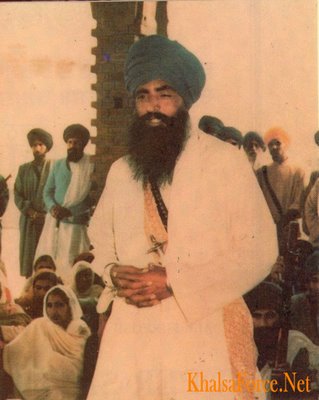
Someone sent me this article today:
How & Why Tat-Khalsa Will Be Victorious - by Balpreet Singh
Today we are seeing some very dark days for our Panth. Not because of our enemies attacking us or trying to destroy us, that has been happening since our creation, but because we ourselves are our own enemies.
People in Sikh appearance are amongst us eating at our roots. We ourselves allow ourselves to be fooled by them. Our "leadership" is filled with failed old men who talk big but have no jeevan or character. These "leaders" will be remembered one day as those idiots who led the Panth to its biggest defeats in history. The once proud Sikh community is a joke in India and abroad and is the first group who have been defeated in an armed struggle by the use of force. Text books printed today all note that Punjab and the Sikh Movement is a unique exception to the rule that no armed insurgency can be put down by force alone.
All I see before me is the need to step away from this old and failed leadership. Its time to recognise that our institutions have rotted away from the inside out because of these people who have sold their souls and compromised every Khalsa rehit.
But I am absolutely optimistic. Why? I see the youth. I see strong Khalsa youth coming up all over and I have a strong hope that these youth will never make any compromise in Khalsa principles and rehit. They will stand for Dashmesh jee and not sell out for personal gain or to appease anybody. This Tat-Khalsa Guru Sahib is creating will drive out the Mallech-Khalsa who are destroying us today.
The following is based on Pr. Satbir Singh's book "Rabab to(n) Nagara" on Why the Khalsa was victorious in the past, and why it will be in the future.
1) The Khalsa has full confidence and faith that they are the rightful and true rulers of this land. Guru Gobind Singh has promised us "Raj Karega Khalsa". This is his promise to us. When we become Khalsa and take those rehits, we should have confidence that Dashmesh PIta is with us in all our fights.
Kalgidhar Jee once said to his Khalsa, "Where the Singhs are fighting for Dharam for Parupkaar and Sikhi, you will forever see me fighting along side my Sikhs as well."
When Abdali asked Baba Ala Singh why the Sikhs never finish, Baba Ala Singh replied, "Guru Gobind Singh has given the Khalsa this blessing that wherever one Sikh falls for the Dharam, two more will come to take his place".
2) The Sikhs know their land. Sikhs are sons of the soil. Punjab is ours. We know every village, every forest, every swamp and every hill. We are the rightful heirs of Punjab. This is the land of Guru Nanak and no foreign power has any right to it.
3) Khalsa has high character and high jeevan. This has been the fault that has stopped us in the recent past. We have abandoned our rehit. When we are ready to sacrifice our lives but not our principles, victory is certain. Khalsa does not harm those who come to its shelter or surrender. Khalsa does not so much as touch another woman or her wealth. The Khalsa rules of battle were so high that if an enemy's turban fell off during battle, the Sikh would say, "Take care of your turban. I'm not here to interfere with your honour..."
This is a contrast to today where Sikhs (more accurately, Malechh Khalsa) when fighting other Sikhs first grab for the dastaar and have no shame in even pulling Kesh.
4) Khalsa would give up Moh (attachment) of all worldly possessions and their homes. They would make their saddles their homes. For the cause of the Panth it was a saying that the Khalsa never put his back down to rest but even slept while walking around. If they were wounded in battle, they would consider the blow to be a holy blessing. The Khalsa would never retreat, only run back and then run forward again. Kazi Nur Muhammed writes, "If they ever run from battle, do not consider this to be a retreat. This is their strategy of war. Watch out! Save yourself from this trap of theirs. Once again, watch out!.
It is this tenacity and selflessness that will come to the rehitvan Khalsa. It is this attitude that will result in Khalsa Raj.
So what can we do? Build your jeevan. Make your rehit so strong that nothing can move it. Build your relationship with Guru Sahib so strong that it can endure any storm. And never compromise your principles. Our old leadership is a joke because it sold out. Guru Sahib will never give his blessings to sell outs. When we stand by every one of Guru Sahib's hukams, there is no doubt we will be victorious.
An example of Khalsa in Chardi Kala can be seen by the Khalsa's declaration of war on the Afghan invaders in 1748. The words of the Gurmatta passed at Akal Takhat Sahib were as follows:
"The Khalsa has broken the Mughal Raj. Now a new storm in the form of Abadali has risen from Kabul and wishes to crush us. The Khalsa hearby eliminates all its internal differences and vows that its kirpan will not go back in its scabbard until this outside threat is completely smashed."
And sure enough, the struggle ended with Sikh Raj over the Punjab.
Waheguru Ji Ka Khalsa Waheguru Ji Ki Fateh
Sunday, September 10, 2006

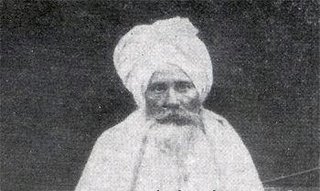
Bhai Jagga Singh Ji

Waheguru Ji Ka Khalsa Waheguru Ji Ki Fateh
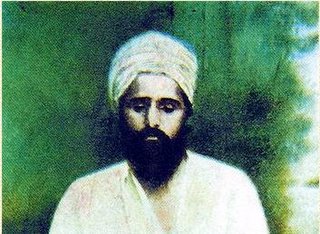
Bhai Jagga Singh Ji performed most assiduous service for Guru Gobind Singh Ji Maharaj and was consequently much envied by his fellow sevadars. Some said that several men and women had done similar service and gone away ungrateful, and Bhai Jagga Singh Ji was not superior to any of his predecessors.

Others said that he being a new sevadar was no doubt diligent, but his zeal would soon evaporate.

All knowing Satguru Sri Guru Gobind Singh Ji Maharaj knew what was being said about his beloved Bhai Jagga Singh Ji so he sent for a vessel of water, a stone and some sweets. He put the stone and sweets into the water. After a short time he ordered them to be taken out. The stone came out as whole, however, the sweets had all dissolved.

Guru Ji read his beloved Sikhs a moral lesson from what they had seen. Maharaj said, that those who served him well and heartily, blended with him as the sweets had done with the water; while those who served him for show and appearance, had hearts like the stone which never dissolved.

Guru Ji then ordered that no one should in the future molest or speak evil of his faithful sevadar Bhai Jagga Singh.

Waheguru Ji Ka Khalsa Waheguru Ji Ki Fateh

Tuesday, September 05, 2006

"Paki Bomber"

Waheguru Ji Ka Khalsa Waheguru Ji Ki Fateh

Ahh, it's good to be back 'home'.

Waheguru Ji Ka Khalsa Waheguru Ji Ki Fateh

Monday, July 31, 2006

Khalsaforce Videos

Waheguru Ji Ka Khalsa Waheguru Ji Ki Fateh


Waheguru Ji Ka Khalsa Waheguru Ji Ki Fateh

Wednesday, July 26, 2006

Why did Guru Har Krishan Sahib Ji Maharaj get "sick"?

Waheguru Ji ka Khalsa Waheguru Ji Ki Fateh
To those who had seen the sick and the suffering being healed by Dhan Dhan Satguru Sri Guru Har Krishan Sahib Ji, it was incomprehensible as to why should the great Healer suffer from the same disease.
The first to lament and pose this question was a young Sikh disciple who asked, "Maharaj, saviour of the world, your glance and benediction cured the suffering and sickness of hundreds of people. You are the dispeller of sorrow and pain, whose glance and touch healed everyone. Why has this suffering come to you?"
Guru Sahib smiled at his beloved Sikh and replied. The suffering of "self consecration or the martyrdom of the Guru is in the redemptive spirit. The Guru is one with God's Light and Presence. His body, mind and soul never suffer any pain or sorrow, but he has to take upon himself the suffering of the human world in a human way. All great prophets and saints found the greatest joy in enduring the unendurable, in sharing the agony of fellow beings for the love of God. Even physical suffering is accepted by them as the gift of grace. To lessen other people's suffering is an act of compassion and charity but to suffer for the fulfilment of God's Will is an Apostle's response to the supreme love of God."
Waheguru Ji Ka Khalsa Waheguru Ji Ki Fateh

Thursday, July 13, 2006

For those who call themselves Sikhs

Waheguru Ji Ka Khalsa Waheguru Ji Ki Fateh
For those who call themselves Sikhs
A. Are you the Sikhs of that Plume-adorned Divine Master (Kalgidhar Sri Guru Gobind Singh Ji), who sacrificed everything for the sake of your seeds’ continuity and prosperity?

B. Are you the descendants of those Great Shaheeds who, for the sake of Sikhi, were sawed and scalped alive, dismembered alive, broken on the wheels, boiled alive, hung their heads at spears, fighting tyranny underwent unbearable and unspeakable sufferings, but didn’t leave the faith, kept the Complete Divine Image intact (ie kept the Divine Hair) and didn’t let Sikhi get any spot of dirt?

C. Are you the sons/daughters of those brave warriors mothers, who let their innocent children get cut into pieces and taken into their laps, and their bodyparts adorned with flowers, and put 1,25 maunds of powder (bombs?) in the black houses of the tyrants, and fought side-by-side with their mighty warrior brothers, and kept their wifely duties and duties towards Sikhi with Keshan-Suasan [being steadfast with both Body-Hair and Soul-Breath]?
D. Are you the you the brothers and sisters of the Adutti-Bhuchangian [ie Amazing ’Small’ Beloved Warriors] like Sahibzada Zorawar Singh and Sahibzada Fateh Singh, who remained steadfast till their last breath, didn’t leave their faith, didn’t kill their hair and didn’t become non-religious, and didn’t bring shame upon the Sikhi BaNaa-Dress, as willingly accepted to be stacked alive in walls?

If you call yourself the Sikh of Guru Nanak-Guru Gobind Singh Ji, then:
1. Why are you letting your Guru’s Name down?
2. Why are you being disrespectful to your hair?
3. Why are you destroying your Complete Divine Image (Sabat Surat)?
4. Why are you indulging in sins?
5. Why are you turning your face away from Sikhi?
6. Why are you becoming a fallen (Patit)?
7. Why are you forgetting Sikh Code (Rehat)?
8. Why leaving Naam-Rass, the pleasure of Name, in the favor of the pleasure of drugs?
9. Why are you indulging in sexual wastes/sexual habits?
10. Why are you leaving the path of Gurmat, and turning towards path of human mind (manmukhta)?
11. Why are you indulging in petty acts and thereby ’making your turban dirty’ (ie loosing your respect)?
12. Why are you indulging in manmats?
13. Why are you loosing your uniqueness (Vilankhanta)?
14. Why don’t you recognize your real self?
15. Why have the children of lions forgotten their uniqueness and engaged with sheep? They have started saying ’main main’ (the sound made by sheep)?

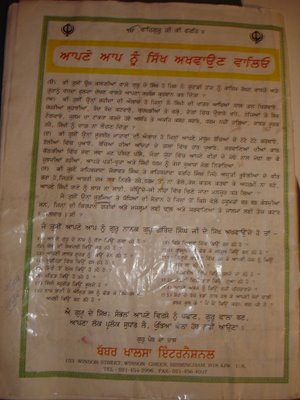
Oh Sikhs of the Guru! Be Cautious and Keep intact your Identity, Become Guru-Valeh (GurSikhs). Bring Such a Reform so that all your generations have bliss. Lost Time will not come back!

Servants of Guru-Panth,

Babbar Khalsa International

Waheguru Ji Ka Khalsa Waheguru Ji Ki Fateh

When will you wake up to your religious duties?

Waheguru Ji Ka Khalsa Waheguru Ji Ki Fateh
We appeal before the Khalsa community and the government that the present committee for the management of the Golden Temple is neither based on the principles of the Khalsa panth nor on government legislation. If this committee was constituted on the basis of the Khalsa religion, its membership would have been made up of only the Khalsa. But at present this is not that case as Raja Harbans Singh, a committee member, is a Hindu, who professes beliefs contrary to that of a Khalsa, for instance idol worship. Similarly the deputy commissioner, another committee member, is a Christian. What benefit can accrue to the Khalsa community from having a Hindu Raja and a Christian deputy commissioner on the management body of its shrine? It is rather ironic that the gurudwara belongs to the community but its management it presided over by a deputy commissioner…As pointed out previously, the setting up of such a committee is not contravention of government legislation. The administration is not supposed to interfere in religious matters. Yet, a government official has been appointed as the president of a Khalsa gurudwara…Therefore we implore both the Khalsa community and the administration that this committee be improved and reconstituted. Oh Khalsa! When will you wake up to your religious duties? Do you not care for your scared shrines?

Khalsa Akhbar, 1st January 1887

More than a hundred years later we seem to be in the same situation.

Waheguru Ji Ka Khalsa Waheguru Ji Ki Fateh

Monday, July 10, 2006

"Punjabi Suba Zindabad"

Waheguru Ji Ka Khalsa Waheguru Ji Ki Fateh

I have wanted to do a post on Punjabi Suba for a long time now. During my reading I came across this eyewitness account by Michael Brecher some time ago.

“First came the Sikhs in the most impressive – and peaceful – demonstration I have ever seen. Hour after hour and mile after mile they marched, eight abreast, down the main street of Amritsar, a hallowed name in Indian nationalism because of the shootings of 1919. Old and young, men and women, they came in an endless stream, most with an expression and sadness in their eyes, many still remembering the ghastly days of 1947 when their homeland was cut in two and hundreds of thousands fled before the Muslims, and when thousands of their co-religionists died or were maimed. What strength there was in the appearance of the older men who, with their flowing beards, looked like the Hebrew prophets of old! Many carried their traditional sword, the Kirpan, and many wore blue turbans, symbol of Sikh militancy. They had come from the villages and towns of the Punjab and from far-off places as well. Almost without exception they marched in an orderly file, portraying their unity of purpose. At intervals came the resounding cry, ‘Punjabi Suba Zindabad’ (Long live Punjabi Suba) and Master Tara Singh Zindabad, with intermittent music to enliven the proceedings. On they came, for five hours. Few watched them could doubt their genuine fear of being swallowed up in the vice-like embrace of rabid Hinduism. By conservative estimate they numbered 100,000. To this observer it seemed more like double that figure.”

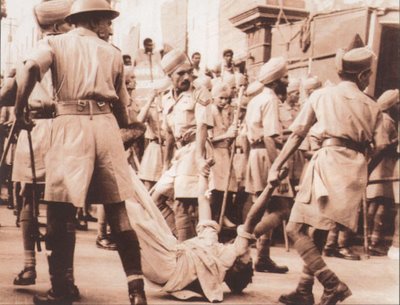
Indian police attacked Darbar Sahib in 1955 for the first time, walked inside with shoes on, arrested Sikhs, disrespected Guru Granth Sahib Ji. Gurdwara Paonta Sahib was attacked in Himachal Pradesh where 16 Sikhs were shot dead inside the Gurdwara. Is this any different that British attacking Gurdwara Rakaab Ganj Sahib?
Hindus were given five days to get their anger out after Punjabi Suba was created. Sikhs were attacked in Haryana, Himachal, MP and other places. Hindus shouted slogans:
sUbI kw mjw cKWeyNgy, vwhgw pwr pucwieNgy [ aUVw eIVI nhI pVyNgy, jUVw jUVI kwt DryNgy [
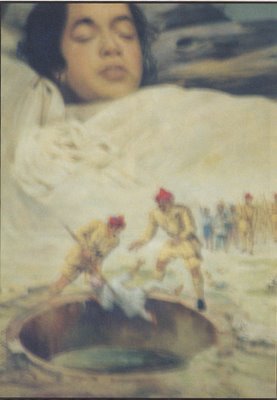
Mughal killed Sikh children and today's Indian government is no different. A 10 years old Sikh boy Inderjit Singh was peacefully shouting the slogan "Punjabi Suba Jindabad" when he was thrown in the well and killed by indian police.
Those who call India their homeland need to pay a little visit to Sikh history and realize that though time has changed but situation, oppression and black laws against Sikhs have not changed. Those who do not learn from their history only live in history books.
Waheguru Ji Ka Khalsa Waheguru Ji Ki Fateh

Saturday, July 08, 2006

A Glimpse of Khalsa Raj

Waheguru Ji Ka Khalsa Waheguru Ji Ki Fateh
In spite of Bahadhur Shah's provocative orders of outright extirpation of the Sikhs, Baba Banda Singh Bahadhur Ji according to the royal newswriter, while at Kalanaur in April 1711, has promised and proclaimed:

"We do not oppress muslims or oppose Islam, but only tyranny and upsurpation of power. Accordingly, for any muslim who approaches him, he fixes a daily allowance and wages, and looks after him. He has permitted them to recite Khutba and Namaz. As such five hundred Muslims have gathered around him. Having entered into his friendship, they are free to shout their call - bang - and say their prayers - namaz - in the army of the wretched (Sikhs)".

Waheguru Ji Ka Khalsa Waheguru Ji Ki Fateh

Friday, July 07, 2006

As is Magahar, so is Benares; I see them as one and the same. Part 2

Waheguru Ji Ka Khalsa Waheguru Ji Ki Fateh
ਤੋਰੇ ਭਰੋਸੇ ਮਗਹਰ ਬਸਿਓ ਮੇਰੇ ਤਨ ਕੀ ਤਪਤਿ ਬੁਝਾਈ ॥
thorae bharosae magehar basiou maerae than kee thapath bujhaaee
Relying upon You, I can live even in the cursed place of Magahar; You have put out the fire of my body.
ਪਹਿਲੇ ਦਰਸਨੁ ਮਗਹਰ ਪਾਇਓ ਫੁਨਿ ਕਾਸੀ ਬਸੇ ਆਈ ॥2॥
pehilae dharasan magehar paaeiou fun kaasee basae aaee 2
First, I obtained the Blessed Vision of Your Darshan in Magahar; then, I came to dwell at Benares. 2
ਜੈਸਾ ਮਗਹਰੁ ਤੈਸੀ ਕਾਸੀ ਹਮ ਏਕੈ ਕਰਿ ਜਾਨੀ ॥
jaisaa magehar thaisee kaasee ham eaekai kar jaanee
As is Magahar, so is Benares; I see them as one and the same.
Virdev Singh Baghel, the king of Kashi, had constructed a beautiful palace. Everybody used to praise the palace.

King Virdev Singh was well aware of Bhagat Kabir ji’s spiritual glory. He had a fervent desire that Bhagat Kabir ji should visit the palace. He made persistent entreaties and finally managed to get Bhagat Kabir ji to accede to his request.

When Bhagat Kabir ji was about to leave after seeing the palace, the king enquired expectantly, “Your Holiness! What did you think about the palace?” The king expected Bhagat Kabir ji to praise the palace, but on the contrary, Bhagat Kabir ji said, “There are two major flaws in this palace.”

The King was shocked. He brooded, “I am the king of Kashi and there are two flaws in my palace!”

The king’s ego was deeply hurt. While everyone heartily praised the palace, here was Bhagat Kabir ji saying it had two major flaws. He asked, “Your Holiness! Please tell me what the two flaws are so that I may get them rectified at the earliest.”

“You cannot set them right,” Bhagat Kabir Ji said.

Bhagat Kabir ji was reluctant to elaborate but when the king insisted, he finally relented and said, “The palace has been built with great effort but the first flaw is that it will not accompany the owner after his death nor will the owner be able to live in the palace forever. The second flaw is that in due course of time the palace is destined to be reduced to ruins.”

It was as if the king had been slapped on his face. He felt hurt and his ego was bruised badly but Bhagat Kabir ji’s darshan, satsang and benign grace soon made him realise the truth, ‘What Bhagat Kabir ji says is absolutely true. I will not be able to live in this palace forever, nor will it accompany me at the time of death, and surely a time will come when the palace will turn into debris.’ He fell prostrate at Bhagat Kabirj i’s feet and became his devotee forever.

When Bhagat Kabir ji was about to depart from this world, he declared, “The work assigned to this body has been completed. Now it is time to get rid of this outer covering for which I will go to Magahar.”

When Virdev Singh was informed of this, he came running to Bhagat Kabir ji and pleaded, “Your Holiness! I had resolved that I would abandon my kingdom and serve you for five years in order to receive your spiritual grace. I had the desire to clean your cottage with my own hands, fetch water from the holy Ganges for you and knead the dough with my own hands to prepare rotis for you. I wanted to tread the path of God-realization under your benign tutelage, but I am utterly shocked to learn that you are going to Magahar for your final journey.”

Bhagat Kabir ji said, “It is too late, O King of Kashi!”

The water of the Ganges is flowing continuously. If you want you can take a dip in the holy waters. It is impossible to take a dip again in the same water that has already flowed past. So is the case with Saints and their satsang. When you come in the vicinity of a Saint, avail yourself of the opportunity right then and there. If you don’t, you will have to grieve over the lost opportunity.

The local populace were surprised to note that Bhagat Kabir ji wanted to leave his body at Magahar. People would come to Kashi during their last days and here Bhagat Kabir ji was leaving Kashi for Magahar.

People in general believe that if one breathes ones last in Kashi, one will attain salvation whereas dying in Magahar would only lead one to hell. Bhagat Kabir ji disregarded such popular superstitions in order to enlighten the people about the Supreme glory of the Lord’s grace and decided to discard his body at Magahar. When they came to know of this announcement, many Mullahs and pandits, accosted Bhagat Kabir ji and said, “All through your life you have been critical of us.”

‘If by worshipping a stone I could attain the Lord, I will rather worship a mountain. Better is the grinding stone that is useful in grinding grains to eat.'

‘Joining stones with mortar; They raise a high mosque, climbing to the top then, the Mullah shouts his prayer, but tell me O Mullah, Is the Lord deaf?’

Throughout your life, you have refuted our views. Lest the consequent sins should take you to hell, we suggest that you better spend your last days in Kashi that may ensure your emancipation after death.
Bhagat Kabir ji said, “No! Not at all! It is not that I shall attain salvation if I leave my body in Kashi and will be sent to hell if I breathe my last at Magahar. All places in this world belong to the Lord. Devotion to the Lord is of utmost import. Then how does it matter where a person breathes his last?

A person, with a cruel and unyielding mind having no devotion towards God, cannot escape hell even if he dies in Kashi. Then how can one, who is devoted to God, be born as a donkey, just because he died in Magahar? Not only will he himself be emancipated, but he will also enable his relatives, friends and followers to attain salvation.

ਜੈਸਾ ਮਗਹਰੁ ਤੈਸੀ ਕਾਸੀ ਹਮ ਏਕੈ ਕਰਿ ਜਾਨੀ ॥
jaisaa magehar thaisee kaasee ham eaekai kar jaanee
As is Magahar, so is Benares; I see them as one and the same.

In those days, it was believed that Magahar was afflicted with two curses: one was that anyone dying in Magahar would be reborn as a donkey and the second was that Magahar would always be in scarcity of water. To shatter these false beliefs Bhagat ji went to Magahar. It is said that once Bhagat Kabir ji set his foot in Magahar, the local river, Aami, that used to flow only during the rainy season started flowing throughout the year.
Waheguru Ji Ka Khalsa Waheguru Ji Ki Fateh

As is Magahar, so is Benares; I see them as one and the same.

Waheguru Ji Ka Khalsa Waheguru Ji Ki Fateh

ਤੋਰੇ ਭਰੋਸੇ ਮਗਹਰ ਬਸਿਓ ਮੇਰੇ ਤਨ ਕੀ ਤਪਤਿ ਬੁਝਾਈ ॥
thorae bharosae magehar basiou maerae than kee thapath bujhaaee
Relying upon You, I can live even in the cursed place of Magahar; You have put out the fire of my body.


ਪਹਿਲੇ ਦਰਸਨੁ ਮਗਹਰ ਪਾਇਓ ਫੁਨਿ ਕਾਸੀ ਬਸੇ ਆਈ ॥2॥
pehilae dharasan magehar paaeiou fun kaasee basae aaee 2
First, I obtained the Blessed Vision of Your Darshan in Magahar; then, I came to dwell at Benares. 2


ਜੈਸਾ ਮਗਹਰੁ ਤੈਸੀ ਕਾਸੀ ਹਮ ਏਕੈ ਕਰਿ ਜਾਨੀ ॥
jaisaa magehar thaisee kaasee ham eaekai kar jaanee
As is Magahar, so is Benares; I see them as one and the same.


One of the holiest city for the Hindus is Kanshi, which is also known as Banaras. Both Banaras and Kanshi are the names of the same city. Banaras is the commercial name of this city while Kanshi is the religious or Dharmik name of this city.

Devout Hindus believe that whoever dies in Kanshi goes straight to Shivpuri. Shivpuri is a place above Swarag (heaven) but much below Sach Khand. This is the place where Shiva the Hindu lord resides.

The bhagats of Shiva prefer to die in Kanshi, so that they may go straight to Shivpuri. In olden days, there were Karvats (cutting saw) in Kanshi, where old people used to pay Pandits to get cut by Karvat. They believed that if they give their life in Kanshi, they would go to Shivpuri. Pandits used to take away all the money of people committing suicide there. They used to promise them Shivpuri after death. Kanshi was the suicide capital of the world in those days.

Maghar is another city, that is not far from Kanshi. It is said that Vishvamitra the famous Hindu sage, planned to build a parallel city to Kanshi, where people who die would go to a higher dimension. Vishwamitra announced that whoever would die in Maghar would go to a higher destination than even Shivpuri.

People had great reverence for Vishwamitra and were aware of his spiritual power. They flocked to Maghar hoping to die there and go to a higher destination. A lot of people from Kanshi too started moving to Maghar and this infuriated Shiva very much as he was losing devotees to Vishwamitra.

Shiva and Vishnu devised a very good plan. I am not sure who was despatched with the duty to foil Vishwamitra’s plans to make Maghar the centre of the Hindu world but who ever went there was very shrewd and cunning. That person disguised as a poor and wretched person, went to Maghar to see Vishwamitra and asked him, “Maharishi jee, is it true that if I die in Maghar, I would go to a very high destination?”

Vishwamitra was very pleased to hear this and said, “Yes my son, if you die here, I promise that you will not go to hell and will go to a place higher than Shivpuri”.

About five minutes later that poor person approached Vishwamitra again and asked, “If I die here at Maghar, where will I go?”

Vishwamitra was very busy at that time and was a little annoyed hearing this person repeat his question again. He said, “My dear son, I already told you and I don't like to repeat again and again you will become someone higher than even the angels and will reside in a very beautiful place, above Shivpur”.

That guy left and came back again just few minutes later and accosted Vishwamitra who was very busy at that time. He asked the same question, “So Maharishi jee, what will I become if I die here at Maghar?”

Vishwamitra is known for his short temper. Great kings even, feared Vishwamitra and never did anything to upset him. Even Siri Krishna used to fear Vishwamitra for his maledictions. The whole generation and family of Siri Krishna was destroyed because of the curse of Vishwamitra. The Kauravs and Paandavs feared him and so did the Gandaars and Maghad Naresh. The only person who fixed Vishwamitra was King Amreek.

Anyway, when Vishwamtra heard that this highly stupid looking person had repeated his question to him, he angrily said, “Oye moorakh Nar, jo bhee yahaan maraega, voh Gardhab banaega” (O stupid rascal, whoever dies here will became a donkey in his next life”.

As soon as Vishwamitra said this, the poor person gave him a victory smile and disappeared from there. He had accomplished what he had come for. He took bachan from Maharishi Vishwamitra that whoever dies in Maghar would become a donkey. When other people heard about Vishwamitra’s bachan, they too fled the city. Kanshi again became the darling city of all Hindus.

So it is the faith of the Hindus that whoever dies in Maghar becomes a donkey and whoever dies in Kanshi goes to Shivpuri.

Waheguru Ji Ka Khalsa Waheguru Ji Ki Fateh

Thursday, July 06, 2006

Indian Justice

Waheguru Ji Ka Khalsa Waheguru Ji Ki Fateh
'Khalsa Ji, one gets justice out of inquiries when there is room for legal representation, argument, and appeal. Here (under Indian Government) it is outright injustice. They have decided to annihilate the Sikhs, to insult their turban, to destroy their Faith. Under this situation, why do you need to use a lawyer and appeal?'
'Khalsa Ji, what assurance, what justice, what fairness can you expect from a Government, from courts, which no longer trust people, which have lost all faith in men and trust only dogs? How can you expect justice from them? Those who have no faith in men, those who have no faith in the legal process, in reasoning, and in appeal to conscience of the perpetrators; those who only trust dogs, but if the dogs point to their own house as the source of crime, they don't trust the dogs either.'

Sant Gyani Baba Jarnail Singh Ji Khalsa Bhindranwale speaking about Indian Justice.

Waheguru Ji Ka Khalsa Waheguru Ji Ki Fateh

Tuesday, July 04, 2006

Bhagat Puran Singh on Bhagti

Waheguru Ji Ka Khalsa Waheguru Ji Ki Fateh
  1. If you make your morning, you've made your day. Don't be irritated by trivial matters. Make sure you take time in the morning for silent, solitary reflection.
  2. Daily have a talk with God. He is a true friend and "It is so natural to discuss with a friend your ambitions and aspirations, your plans and programmes, your failures and frustrations and ask him to help you". We may not be able to at first see him or hear him, but be certain that he does see and hear you. We will meet God only when he is sure that "your truly need Him and nothing besides."
  3. Prayer is not easy: "A holy man driving a car, met a beggar on the way. The beggar exclaimed, "If only I too became a holy man, a man of prayer, I would have a car!""Prayer is not that easy" said the holy man. "If you say too(n) thaakur tum pai ardaas... with a concentated mind, the car (and much more) can belong to you""Wonderful!" Said the astonished beggar. Joining his hands and closing his eyes he said the prayer aloud, "Too(n) thakur tum pai ardaas. Jeeo pind sabhi teree raas..."Suddenly in mid prayer, his eyes opened up and he asked, "Shall I have a garage along with car? Else where would I keep it???" Moral: concentrated prayer is not an easy task.
  4. Make God your life partner: He can be a partner in your daily life and all activities and miracles can happen. Rest assured that there is no problem which you and God cannot solve together and no situation you cannot handle together.
  5. A loving relationship is based on a feeling of being needed. Think about when you have felt closest to someone. It is quite possibly a time when you have been needed by them. Feeling needed and wanted is something that fosters love not only between humans but also with God. When God knows you need him and only him and have no other support, he will then come to you.

Waheguru Ji Ka Khalsa Waheguru Ji Ki Fateh

Thursday, June 15, 2006

The King of Martyrs

Waheguru Ji Ka Khalsa Waheguru Ji Ki Fateh

We celebrated the 400th anniversary of Guru Sahib's (physical) shaheedi on the 31st of May. I meant to do a post on our beloved Guru Ji then but some other things came in the way unfortunately.

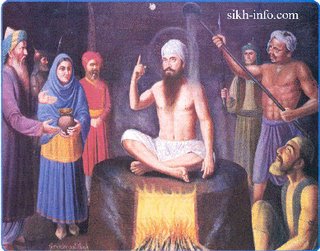
Mian Mir, the Muslim saint of Lahore, also went and contributed his sympathetic tears. He found Guru Jis body all blistered and suppurated, and requested his permission to appeal to the Emperor for his release and the punishment of his torturers. Guru Ji requested him to cast his eyes towards the heavens.
On doing so, Mian Mir saw angels begging Guru Jis permission to destroy the wicked and the proud. Mian Mir on beholding this supernatural vision asked Guru Ji, why when he possessed supernatural power, he consented to endure suffering at the hands of such vile sinners.
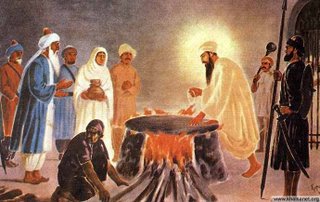
Guru Ji replied, 'I bear all this torture to set an example to the teachers of the true name, that they may not lose patience or rail at God in affliction. The true test of faith is in the hour of misery. Without examples to guide them ordinary persons' minds quail in the midst of suffering. In the second place, if he who possesseth power within him defend not his religion by the open profession thereof, the man who possesses no such power when put to the torture abjure his faith. The sin will light on the head of him who has the power but does not show it; and god will deem him an enemy of religion. In the third place, the body is naturally subjected to woe and weal, but not the spirit. The body is perishable, the soul is imperishable. To set aside by the exercise of supernatural power the law of nature which applies to all things perishable. and thereby to, engender pride in the heart, would be supreme folly.'
Dhan Dhan Satguru Sri Guru Arjan Dev Ji Maharaj
Waheguru Ji Ka Khalsa Waheguru Ji Ki Fateh

Tuesday, June 13, 2006

Killing the Five Evils: Overcoming Lust (Kaam) Part 5

Waheguru Ji Ka Khalsa Waheguru Ji Ki Fateh

This will be the final post on Kaam.

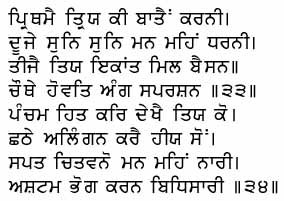
There is a parsang of Guru Nanak Dev Ji blessing gyan to Emperor Shivnaabh. Upon gaining the grace of Guru Nanak Sahib Ji, the emperor asked Guru Sahib to bless him with gyaan and Guru Sahib at that time mentioned many different virtues which are important and Guru Sahib also told him to stay away from kaam, even in thoughts. Guru Sahib mentioned that there is kaam of 8 kinds, which takes steps and the ‘stages’ increase from one to the next if one fails to control the initial stage. Here is the exact passage from that Sri Guru Nanak Parkash:

First stage is of talking to one another about those of other sex. And the next stage occurs when one starts thinking of such talks by himself and others in his mind. Third stage occurs when one meets those of other sex in person. Fourth is when one touches the other person. Fifth is when s/he looks at others with an urging interest. Sixth is when that person touches the other with having lustful desires. Seventh is when that person constantly keeps on thinking of the other person in his mind. Eighth is when he fulfills the desires of his mind.

As we can see that the first few stages might not seem very objectionable but later on the stages start becoming obvious and if the person does happen to enter any of the final stages I believe that is when the person ruins everything up for himself.

So to save ourselves from such stages it’s important that we stay away from the early ones.

By: Saffajang Singh

Waheguru Ji Ka Khalsa Waheguru Ji Ki Fateh