Tuesday, June 13, 2006

Killing the Five Evils: Overcoming Lust (Kaam) Part 4

Waheguru Ji Ka Khalsa Waheguru Ji Ki Fateh
Ishq-e-Haqeeqi Vs Ishq-e-Mizaajee
As written by Bhai Nandlal jee, the majnoo of Vaheguru does not fall for a worldly beauty like Laila:
MAJNOON-E-TAU KAI AASHIQ-E-LAILA BAASHAD
Our Guru Sahibaan expects his Sikh to be an Aashiq (premi, lover) not of a worldly beauty but of Vaheguru. In Siri Aasa kee Vaar, Siri Guru jee states:
IH, KINEYI AASHIQEE, JE DOOJAI LAGAI JAAYE
(What kind aashiqee i.e. love is this, that permits to love someone else, other than your beloved Vaheguru?)
NANAK, AASHIQ KAANDHIYE, SADD HEE RAHAI SAMAAYE
(Guru Angad Sahib writes that the true aashiq is so who stays forever merged in Vaheguru)
Look how high the ideal of love in Sikhi is and how lowly the worldly (ishq-e-mazaajee) love is. Gurmat preaches that we should be such lovers of Vaheguru that we should stay forever in his yaad (sweet rememberence).
Is there anything that the lovers of Vaheguru have not done for their love? The true aashiqs of Vaheguru have sat on red hot pans and had hot sand pour over them. They had their head severed in love for their beloved. They let the aggressors burn them alive in cotton but they did not even once let their love for their beloved one go down. They were cut in half. They were boiled alive. They were made to roll over the killer wheels.
The aashiqs of Vaheguru gave their lives at one signal from their beloved Guru. They had their skulls removed for their beloved. They had their children cut into pieces for their beloved one.
The aashiqs of Vaheguru spent their youths in jails but did not let their love go down. They kept their rehit intact and against all odds obeyed the hukam of their beloved.
This is what aashiqs of Vaheguru did. What did Vaheguru do in return? Vaheguru in return gave them immense bliss of Naam Rass and gave them everlasting spot in Sach Khand.
Now let us look at the lives of worldly aashiqs. They too sacrificed a lot. Kaiz who is popularly known as Majnoo gave up his royal status for Laila, his beloved. He went city to city for her and in the end perished in the deserts of Arabia. What did he get in return from Laila? Nothing substantial.
Ranjha, gave up Takhat Hazaara and for a dozen years worked as a servant for Choochak (father of Heer). He became a diwaana of Heer but what did Heer do in the end? She married someone else and left for her in-laws at Rangpur KheRa. Poor Dheedo (Raanjha) become a jogi.
Sassee perished in the desert for Punoo and Sohni pershised in river chanaa for Mahivaal. What did they get in return?
This way we can give several examples of failure of ishq-e-mizaajee. In the case of Laila Majnoo, what could have been the possible peak of this love? At the most Majnoo would have married Laila. So is this an everlasting relationship? Not according to baani.
On the other hand, Bhai Taaroo Singh jee had his skull removed by the Muslims, out of love for Siri Guru Gobind Singh jee. What did Bhai Taaroo Singh jee get in return? He already had Naam Rass and now he became one with Vaheguru and is now in Sach Khand with Vaheguru.
I don't have any doubts over the intentions of Raanjha and Majnoo. Even Bhai Gurdas jee has praised their spirit and hard work but the reality is that the end result of this love is not that great.
Reading baani we learn that the true aashiqs i.e. the Gursikhs of Guru Nanak Dev jee, succeed in getting good results out of their hard work. The worldly aashiqs too are of two categories - ones who are inspired by kaam (99%) and the ones inspired by love for soul e.g. Ranjha, Majnoo etc. The ones inspired by Kaam surely go to hell and the ones like Ranjha and Majnoo too cannot achieve anything high according to baani, because baani preaches that one gets what one aims for and if these guys Ranjha and Majnoo were to get their love, what would they really gain from that? At the most they may marry their love in the next life and then have children from them. Would it result in everlasting rest? No! It will surely put them back in chauraasee (8.4 million life forms). There will be no way out.
According to baani, only those ones, who become aashiqs of Vaheguru, get any real results for their hard work. Rest waste their time.
In the light of all this, is it not our duty to deliver ourselves by dying on the Amrit Naam of Satguru? Is it not our duty to never miss amritvela and during amritvela japp naam with full concentration?
May Guru Sahib make us his real aashiqs. Gurbani is calling out to us, to take precaution during our youth. During the youth time, there is high probability of making a mistake that can leave a scar on the life of Gursikh for rest of his life. It is not worth it.

By: Bhai Kulbir Singh

Waheguru Ji Ka Khalsa Waheguru Ji Ki Fateh

Friday, June 09, 2006

Killing the Five Evils: Overcoming Lust (Kaam) Part 3

Waheguru Ji Ka Khalsa Waheguru Ji Ki Fateh
ਦੇਖਿ ਪਰਾਈਆਂ ਚੰਗੀਆਂ ਮਾਵਾਂ ਭੈਣਾਂ ਧੀਆਂ ਜਾਣੈ ॥

"Men should look at the opposite sex as mothers, sisters and daughters, (women should look at the opposite sex as fathers, brothers and sons)." (Var. 29, Pauri 11, Bhai Gurdas ji)

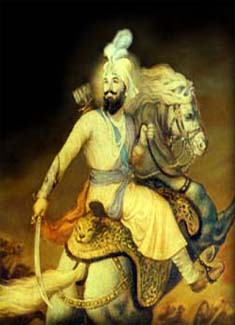
A Singh had rescued some Hindu Princess from the invaders. The princess was considered one of the most beatiful women in India. She along with others had been kidnapped to be taken back to Afghanistan and a Jatha of Singhs had rescued them.

The Singh that rescued her put her on his horse and began to take her back to her home. The Singh himself was very tall and strong and seeing his way of life on their journey, she asked that he not take her back and instead marry her.

The Singh paid no mind to her request and kept going and dropped her off and then returned to his Jatha.

When the other Singhs asked what had happend and he told them, one Singh asked, "Veer ji, she is considered the most beatiful woman in the North, did you not feel any desire or weakness on the journey or when she proposed to you?"

The Singh replied, "On one side before me stood a form made of mud, filled with filth and crumbling slowly with age. On the other side stood the eternal form of Dashmesh pita, glowing and forever present. What choice was there?"
Here are some other posts about Kaam which I encourage you to read: Panthic Otpreka,
Fighting Kaam, Shabad Kaam Maran Deh.

Waheguru Ji Ka Khalsa Waheguru Ji Ki Fateh

Thursday, June 08, 2006

Killing the Five Evils: Overcoming Lust (Kaam) Part 2

Waheguru Ji Ka Khalsa Waheguru Ji Ki Fateh
The Emperor said to Satguru Sri Guru Har Gobind Sahib Ji Maharaj, 'You are a very young man. Many beautiful women come to see you. It is extremely hard to subdue youthful passions. How do you O True King succeed in doing so?'
Satguru Ji said, 'Dear Brother, there was once a very religious and chaste man who had conquered his passions. A lewd and adulterous king used to wait on this man. The saint once asked him what desire he sought to gratify by his attention to him.

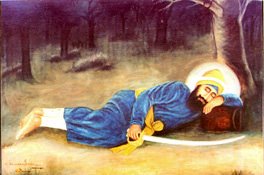
The King replied, 'I am a lustful man. I ever desire sexual pleasures and the gratification of all my desires.'
The Saint replied, 'Because of this enjoyment you have only eight more days of your life to live, which you may enjoy as you please. On the ninth day you will surely die.'
The King, was very worried and asked the saint if there was anything that he could do to avert his fate.
The Saint replied, 'Meditate on the name of Waheguru.'
The King, left the saint and hurried home..... He abandoned all worldly affairs, and so applied himself to devotion of the name of Waheguru so that all impure desires left his mind.
The ninth day came, and the King went to the Saint and informed him of how he had spent his time since their last meeting. The saint then said, that his life was saved by the power of his devotion and then asked him how he had abandoned sensuality.
The King replied, that it was through the fear of impending death....
The saint smiled, looked at the king and said, 'that is an answer to the question you asked. That is the way to avert your fate. You thought that you will die in eight days, so no evil desires entered your mind, while as for myself, I am not certain that that death will not come and seize me at any moment. On this account my mind is unswayed by passion.'
Satguru Ji then said, 'O Emperor Jahangir, there is no reliance to be placed on death; it comes like a thief when we expect it not to come. If a man had information, he would not allow things to be stolen from his house.'
Waheguru Ji Ka Khalsa Waheguru Ji Ki Fateh

Wednesday, June 07, 2006

Killing the Five Evils: Overcoming Lust (Kaam) Part 1

Waheguru Ji Ka Khalsa Waheguru Ji Ki Fateh
People often say that the most detrimental of all mistakes a Sikh could make is to get involved in a relationship with the opposite sex. This doesn't necessarily mean being physically involved, but even something as "harmless" as developing feelings for another person outside of marriage can cost you everything. It seems almost impossible to recover after such a mistake. Even months and months later, there seems to be no escape in sight from all the damage it causes on a spiritual level.

There was once a young Singh, perhaps in his early 20's, who used to do sevaa in Punj Pyaaray with Bhai Sahib Randhir Singh Jee. What a high avastha that youth must have had to do sevaa amongst such chardi kalaa Gursikhs. Bhai Sahib used to warn this youth to limit his interactions and communications with the opposite sex. He was warned to be careful and to talk to bibiaan less.

However, this youth, like many of us, probably gave himself a lot of credit. He probably doubted that he could fall prey to the enticement of maya and doubted he would be tempted by kaam.
But, lo and behold, he fell. And very badly, too. He committed such a grave mistake that warranted presenting himself before the Punj Pyaaray to seek forgiveness.
He traveled to a Smaagam to get peshed, but the Punj Pyaaray there told him to return to his hometown and get peshed there in a local Amrit Sinchaar. This youth however was extremely ashamed of his mistake and had too much pride to present himself before his local Sangat. So, instead of getting peshed and trying to continue on with his Sikhi, this Singh disappeared altogether and no one ever saw or heard from him again. Some say that he committed suicide since he was never seen again.
Drastic measures? I think not. It just shows how grave the mistake can be and just how detrimental it is, often to the point of no return.This youth didn't heed Bhai Sahib's advice to steer clear of being close with the opposite gender, so who would heed my advice now? All I can say is that the stakes are very high and if a Singh of such a high spiritual avastha can fall, what makes us think we can't? I see so many youth today who are clearly emotionally attached and involved with one another in the form of a "crush" if not more. They think they are safe and their relationships are acceptable and they won't cross the line by falling prey to kaam.
But I say you've already fallen once you've developed feelings of this nature for a member of the opposite sex. And I tell you, it could happen to anyone, so it's best to be vigilant. We are all like wax that will easily melt when placed in the vicinity of fire. We're better off keeping a distance from the flame because after melting, there's no going back. Try as you might, sometimes it seems that the damage is irreparable.
I'm not sure who wrote this but it echos most of the things I wanted to say. I will post some of my own thoughts on this next time, along with an amazing sakhi about Dhan Dhan Satguru Sri Guru Hargobind Sahib Ji Maharaj which relates to this vice.
Waheguru Ji Ka Khalsa Waheguru Ji Ki Fateh

Friday, June 02, 2006

ਮਿਤ੍ਰ ਪਿਆਰੇ ਨੂੰ ਹਾਲ ਮੁਰੀਦਾਂ ਦਾ ਕਹਿਣਾ

Waheguru Ji Ka Khalsa Waheguru Ji Ki Fateh

ਖਿਆਲ ਪਾਤਿਸ਼ਾਹੀ ੧੦॥
KHYAL OF THE TENTH KING

ਮਿਤ੍ਰ ਪਿਆਰੇ ਨੂੰ ਹਾਲ ਮੁਰੀਦਾਂ ਦਾ ਕਹਿਣਾ ॥
Convey to the dear friend the condition of the disciples,

ਤੁਧੁ ਬਿਨੁ ਰੋਗੁ ਰਜਾਈਆਂ ਦਾ ਓਢਣ ਨਾਗ ਨਿਵਾਸਾਂ ਦੇ ਰਹਿਣਾ ॥
Without Thee, the taking over of quilt is like disease and living in the house is like living with serpents;

ਸੂਲ ਸੁਰਾਹੀ ਖੰਜਰੁ ਪਿਆਲਾ ਬਿੰਗ ਕਸਾਈਆਂ ਦਾ ਸਹਿਣਾ ॥
The flask is like the spike, the cup is like a dagger and (the separation) is like enduring the chopper of the butchers,

ਯਾਰੜੇ ਦਾ ਸਾਨੂੰ ਸੱਥਰੁ ਚੰਗਾ ਭੱਠ ਖੇੜਿਆਂ ਦਾ ਰਹਿਣਾ ॥੧॥੧॥
The pallet of the beloved Friend is most pleasing and the worldly pleasures are like furnace.
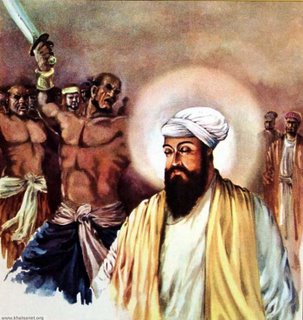
Dhan Dhan Satguru Sri Guru Gobind Singh Ji Maharaj, the King of Kings and the Saint of Saints
Waheguru Ji Ka Khalsa Waheguru Ji Ki Fateh

Thursday, May 25, 2006

Does EVIL exist?

Waheguru Ji Ka Khalsa Waheguru Ji Ki Fateh
This is an interesting email that my dad sent me today.
Does EVIL exist?
A University professor at a well-known institution of higher learning challenged his students with this question. "Did God create everything that exists?" A student bravely replied, "Yes he did!" "God created everything?" The professor asked. "Yes sir, he certainly did," the student replied. The professor answered, "If God created everything; then God created evil. And, since evil exists, and according to the principle that our works define who we are, then we can assume God is evil."
The student became quiet and did not answer the professor's hypothetical definition. The professor, quite pleased with himself, boasted to the students that he had proven once more that the Christian faith was a myth.
Another student raised his hand and said, "May I ask you a question, professor?" "Of course", replied the professor. The student stood up and asked, "Professor, does cold exist?" "What kind of question is this? Of course it exists. Have you never been cold?" The other students snickered at the young man's question.
The young man replied, "In fact, sir, cold does not exist. According to the laws of physics, what we consider cold is in reality the absence of heat. Every body or object is susceptible to study when it has or transmits energy, and heat is what makes a body or matter have or transmit energy. Absolute zero (-460 F) is the total absence of heat. And all matter becomes inert and incapable of reaction at that temperature. Cold does not exist. We have created this word to describe how we feel if we have no heat." The student continued, "Professor, does darkness exist?" The professor responded, "Of course it does."
The student replied, "Once again you are wrong, sir, darkness does not exist either. Darkness is in reality the absence of light. Light we can study, but not darkness. In fact, we can use Newton's prism to break white light into many colors and study the various wavelengths of each color. You cannot measure darkness. A simple ray of light can break into a world of darkness and illuminate it. How can you know how dark a certain space is? You measure the amount of light present. Isn't this correct? Darkness is a term used by man to describe what happens when there is no light present."
Finally the young man asked the professor, "Sir, does evil exist?" Now uncertain, the professor responded, "Of course, as I have already said. We see it everyday. It is in the daily examples of man's inhumanity to man. It is in the multitude of crime and violence everywhere in the world. These manifestations are nothing else but evil."
To this the student replied, "Evil does not exist, sir, or at least it does not exist unto itself. Evil is simply the absence of God. It is just like darkness and cold, a word that man has created to describe the absence of God. God did not create evil. Evil is the result of what happens when man does not have God's love present in his heart. It's like the cold that comes when there is no heat, or the darkness that comes when there is no light." The professor sat down.
The young man's name -- Albert Einstein
Waheguru Ji Ka Khalsa Waheguru Ji Ki Fateh

Wednesday, May 24, 2006

Killing the Five Evils: Overcoming Anger (Krodh)

Waheguru Ji Ka Khalsa Waheguru Ji Ki Fateh

sloku ]salok
Salok:

kwm k®oD Aru loB moh ibnis jwie AhMmyv ]kaam krodhh ar lobh moh binas jaae aha(n)maevSexual desire, anger, greed and emotional attachment - may these be gone, and egotism as well.


nwnk pRB srxwgqI kir pRswdu gurdyv ]1]naanak prabh saranaagathee kar prasaadh guradhaev 1Nanak seeks the Sanctuary of God; please bless me with Your Grace, O Divine Guru. 1

Anger

Satguru Sri Guru Tegh Bahadhur Ji Maharaj, the king of kings, the saint of saints and the blanket of the world said to his sikhs, 'In anger man commits evil deeds. He loses at once his senses, and his religion. When anger springs up in a man's heart, what crime is there he will not perpetrate?'

He thinks nothing of sinning against his parents and his holy Guru. He takes the life which he ought to protect, and utters nothing but harsh language. He will not refrain from any act even though he sacrifices his life in its execution. There is no greater sacrifice than life, and yet the foolish person will deliberately make it. The angry man's soul burns if he does not obtain his desires. He cannot eat or sleep. Day and night he is tortured by his passion, and forms endless plans for its gratification. In this way he passes his time in misery.

Forgiveness

'To exercise forgiveness is a great act. To exer­cise forgiveness is to give alms. Forgiveness is equal to ablutions at all places of pilgrimage. For­giveness ensures man's salvation. There is no virtue equal to forgiveness.'

'Whenever you get the chance generously exercise it. Never abandon this virtue, but ever preserve it in your hearts. You are ordered in the Granth Sahib (Guru Granth Sahib Ji Maharaj) to lay up the wealth of the Name, so that it may accompany you in this world and in the next.'

'This wealth is only found in the companion­ship of good men, and cannot be obtained by any other means. My followers possess this wealth which is superior to all jewels and gems. The saints hoard it day and night.'

'It cannot be purchased, no thief can steal, no fire consume, no water drown it, whereas worldly wealth is generally accumulated by sin. Thieves can steal it, pickpockets purloin it, kings seize it, fire burn it, and earth rot it. At the hour of death this sinful wealth only causes regret, and, through man's desires being fixed on it his soul falls into terrible hell.'

I will post a sakhi relating to this next time.

Waheguru Ji Ka Khalsa Waheguru Ji Ki Fateh

Monday, May 22, 2006

Killing the Five Evils: Overcoming Attachment (Moh)

Waheguru Ji Ka Khalsa Waheguru Ji Ki Fateh

sloku ]
salok
Salok:

kwm k®oD Aru loB moh ibnis jwie AhMmyv ]
kaam krodhh ar lobh moh binas jaae aha(n)maev
Sexual desire, anger, greed and emotional attachment - may these be gone, and egotism as well.

nwnk pRB srxwgqI kir pRswdu gurdyv ]1]
naanak prabh saranaagathee kar prasaadh guradhaev 1
Nanak seeks the Sanctuary of God; please bless me with Your Grace, O Divine Guru. 1

A Sikh once came into the darbar of Satguru Sri Guru Gobind Singh Ji Maharaj asked this question, "O True Emperor, holy men have risen above worldly attachment. By what thought are they aided? Attachment is a very chronic ailment of mankind. By what method have they risen above this? Please, be kind and explain it to us."

"I will tell you the way the saints have conquered attachment to the world. They regard the material possessions as a dream. Just as what you see in a dream, does not exist when you wake up, in the same way saints have woken up to the real knowledge (gyan). All objects of the world appear to be transient to them," explained Maharaj.

Satguru Sri Guru Gobind Singh Ji then began to tell a story, "There was a saint, who had attained a high spiritual stage. Living in the midst of the world, he remained above its pleasures and sorrows. Someone came and informed him that his son had died. The saint did not express any grief at the news. The people talked about the son thus, 'Sant ji, your son was very handsome and young. He was also very learned. At his death all others expressed their shock. But you have not mourned his death. What considerations have influenced your mind?'

"During the night I saw a dream in which I was a king. I married and got a son. But when I woke up, there was neither kingdom, nor wife and son. On waking from this dream, I heard the news that my son of the world of consciousness had died. Then I went to my Gurdev and told him of my miserable plight. 'Swami ji,' I said, 'not only has my dream world disappeared, but my real son also is no more. What should I do now? I am overwhelmed with grief.'

"Give up mourning over both, for the whole universe is an illusion, the dream world and the conscious world. What is an illusion, does not deserve mourning over. Illusion means that in fact nothing was created, or exists. Uncreated objects enter our vision, in dreams or in the conscious world. Therefore, stop mourning over both,' explained my Gumdev to me, and the reality clearly dawned in my mind. For this reason, I am not affected by sorrows or pleasures of the world.' This is the way saints have risen above worldly attachments," concluded the Satguru Sri Guru Gobind Singh Ji Maharaj, the king of kings and the saint of saints.

sloku ]
salok
Salok:

kwm k®oD Aru loB moh ibnis jwie AhMmyv ]
kaam krodhh ar lobh moh binas jaae aha(n)maev
Sexual desire, anger, greed and emotional attachment - may these be gone, and egotism as well.

nwnk pRB srxwgqI kir pRswdu gurdyv ]1]
naanak prabh saranaagathee kar prasaadh guradhaev 1
Nanak seeks the Sanctuary of God; please bless me with Your Grace, O Divine Guru. 1


Waheguru Ji Ka Khalsa Waheguru Ji Ki Fateh

Monday, May 15, 2006

An Amazing Post

Waheguru Ji Ka Khalsa Waheguru Ji Ki Fateh

I encourage you all to read this post by Shinda Veerji on the jeevan of Sri Maan Sant Baba Thakur Singh Ji Khalsa. It's one of the most amazing posts I have ever read.

Dhan Dhan Sri Maan Sant Baba Thakur Singh Ji Khalsa

Waheguru Ji Ka Khalsa Waheguru Ji Ki Fateh

Thursday, May 11, 2006

The power of King Janak

Waheguru Ji Ka Khalsa Waheguru Ji Ki Fateh

Recently I was having an interesting conversation with a friend about Saints (I will write about this later) which existed in this world prior to the coming of Guru Sahib in his physical form. One such saint was King Janak. Bhai Gurdas Ji has written about King Janak in his Vaars:

Bgq vfw rwjw jnk hY gurmuK mwXw ivc audwsI]
bhagath vaddaa raajaa janak hai guramukh maayaa vich oudhaasee
King Janak was a great saint who amidst maya remained indifferent to it.

dyv lok noN cilAw gx gMDrb sBw suKvwsI]
dhaev lok no(n) chaliaa gan ga(n)dhharab sabhaa sukhavaasee
Along with gans and gandharvs (calestial musicians) he went to the abode of the gods.

jmpur gieAw pukwr sux ivllwvn jI nrk invwsI]
jamapur gaeiaa pukaar sun vilalaavan jee narak nivaasee
From there, he, hearing the cries of inhabitants of hell, went to them.

Drmrwie no AwiKEnu sBnw dI kr bMd KlwsI]
dhharamaraae no aakhioun sabhanaa dhee kar ba(n)dh khalaasee
He asked the god of death, Dharamrai, to relieve all their suffering.

kry bynqI Drmrwie hau syvk Twkur AibnwsI]
karae baenathee dhharamaraae ho saevak t(h)aakur abinaasee
Hearing this, the god of death told him he was a mere servant of the eternal Lord (and without His orders he could not liberate them).

gihxy DirAnu iek nwauN pwpW nwl krY inrjwsI]
gehinae dhharian eik naaou(n) paapaa(n) naal karai nirajaasee
Janak offered a part of his devotion and remembrance of the name of the Lord.

pwsMg pwp n pujnI gurmuK nwauN Aqul n qulwsI]
paasa(n)g paap n pujanee guramukh naaou(n) athul n thulaasee
All the sins of hell were found not equal even to the counterweight of balance.

nrkhuM Cuty jIAw jMq ktI glhu islk jmPwsI]
narakahu(n) shhuttae jeeaa ja(n)th kattee galahu silak jamafaasee
In fact no balance can weigh the fruits of recitation and remembrance of the Lords name by the gurmukh.

mukiq jugiq nwvYN kI dwsI ]õ]
mukath jugath naavai(n) kee dhaasee a
All the creatures got liberated from hell and the noose of death was cut. Liberation and the technique of attaining it are the servants of the name of the Lord.
After a long life of mediation and naam abhiyaas, King Janak gave up his body. A divine chariot decorated with many bells descended and King Janak’s soul boarded it. On the way the chariot came near to the abode of Dharam Raj, the lord of death. There, sinners were suffering punishment in millions of hells. When the wind that had touched the soul of King Janak came to them they felt great joy and their misery disappeared. Then those persons, oppressed by sins, wanting to keep King Janak's association, began to lament. They spoke piteously to King Janaka, "O blessed one. Please do not leave. We who are greatly tormented are feeling happy due to contact with the breezes that have touched your body."

Hearing their words, the very righteous king became filled with pity and thought to himself, "If due to the touch of the breezes that have touched my body I am bringing some happiness to the residents here, then I will stay in this place. This is heaven for me."

Thinking like this, the king stayed there by the gateway to hell. After some time, Dharam Raj himself, who inflicts severe torment upon sinners, came to that gateway. There he saw King Janak, full of mercy and a doer of great meritorious deeds, standing by the doorway.

Dharam Raj smiled and said to King Janaka, "O king! You are sarva-dharma-siromani - the crest jewel of piety. Why have you come here? This is a place for wicked sinners who cause harm to others. Men like you who perform meritorious deeds do not come to this place. Only those persons who deceive others, who are engaged in criticizing others, and who are intent on stealing others' wealth come here. One who, out of greed for wealth, deceives his friend, comes here and receives intense punishment from me."

Dharam Raj then said, "Those persons who do not remember the Lord with their mind, words, or deeds I throw into hell and have boiled. Those who have remembered the Lord leave the sufferings of hell and quickly go to Heaven.

"O very intelligent king, my servants, unable to even look at persons like you, bring those who are great sinners. Therefore you should leave this place and go enjoy many pleasures. Enter the excellent chariot and go reap the fruits of the religious merits you have earned."
Hearing the words of Dharamraj, with great compassion King Janaka replied, "O Dharam Raj, out of pity on these beings I shall not go to Heaven. Although situated in this place, they are feeling some comfort due to the breezes blowing past my body. If you release all of these persons living in hell then I shall be happy and will proceed to Heaven."

Hearing the words of King Janaka, Dharam Raj pointed out to him each of those living in hell and said told the king why they were in hell and the punishment each one of them was going to receive.

After making all of these persons eat the fruit of their sins, I shall release them. O best among men who have accumulated vast amounts of religious merit, please leave this place.
Having pointed out the sinful persons, Dharam Raj became quiet. With his eyes full of tears, King Janaka, the great devotee of the Lord, said, "Tell me, how can these miserable beings quickly be set free from hell and attain happiness?"
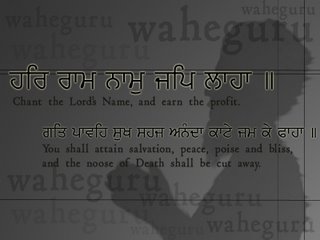
Dharam Raj replied, "These persons have never worshiped the Lord. How then can they be free from hell? O great king, if you desire to release them, even though they are great sinners, then give them the following religious merit possessed by you: Once, upon getting up in the morning, you meditated with a pure heart upon the Lord— the remover of great sins. Give them the religious merit which you obtained that morning when with a pure heart you uttered, "Rama, Rama." Obtaining that merit, they will get freedom from hell."

Hearing these words of the intelligent Dharam Raj, the great king Janak gave those persons the religious merit obtained by him from his birth. King Janak said, "Let these persons be released from hell due to the religious merit earned by me from birth by the worship of God."

As soon as he said this, those persons dwelling in hell immediately were freed from their suffering condition and obtained divine bodies. They said to King Janak, "O king, by your favour, in one moment we have been freed from miserable hell and will now go to the highest position."

Seeing those now-effulgent persons freed from hell, King Janak, who desired the welfare of all living beings, was very pleased in his mind. All those persons praised the great King Janak, the very treasure house of compassion, and went to the spiritual world.
Waheguru Ji Ka Khalsa Waheguru Ji Ki Fateh
Friday, May 05, 2006

Videos

Waheguru Ji Ka Khalsa Waheguru Ji Ki Fateh
:)

Waheguru Ji Ka Khalsa Waheguru Ji Ki Fateh
Friday, April 21, 2006

Update

Waheguru Ji Ka Khalsa Waheguru Ji Ki Fateh
This Blog will not be updated for a couple of weeks.

Take care everyone!

Waheguru Ji Ka Khalsa Waheguru Ji Ki Fateh
Thursday, April 20, 2006

Definition of Gursikh and Chardeekala

Waheguru Ji Ka Khalsa Waheguru Ji Ki Fateh
There are a few words which are overused today by a lot of Sikhs who don't even know what they really mean. Words like Gursikh and Chardeekala.

Mirza Mugammad Harisi, an eye witness to the parade and execution of Amar Shaheed Baba Banda Singh Bahadhur Ji and the other brave sons and daughters of Satguru Sri Guru Gobind Singh Ji Maharaj defines these two words perfectly:

On this day I had gone to see the tamasha (spectacle) as far as the Mandavi-I-Namak (Salt market) and had thence accompanied the procession to the Qilah-I-Mubarik(Imperial Fort). There was hardly any one in the city who had not come out to see the tamasha or to enjoy the show of the extirpation of the accused ones (Sikhs). Such a crowd in the bazaars and lanes had been rarely seen. And the Musalman could not contain themselves for joy.

But those unfortunate Sikhs, who had been reduced to this last extremity, were quite happy and contented with their fate; not the slightest sign of dejection or humility was seen on their faces. In fact, most of them, as they passed along on their camels, seemed happy and cheerful, joyfully singing the sacred hymns of their Scripture.

And, if any one from amongst those in the lanes and bazaars called out to them that their own excesses had reduced them to that condition, they quickly retorted saying that it had been willed by the Almighty and that their capture and misfortune was in accordance with His Will.

And, if any one said, “Now you will be killed,” they shouted, “Kill us. When were we afraid of death? Had we been afraid of it, how could we have fought so many battles with you? It was merely through starvation and for want of food that we fell into your hands, otherwise you know already what deeds we are capable of.


Mirza Muhammad Harisi – Ibrat Nama

Waheguru Ji Ka Khalsa Waheguru Ji Ki Fateh

Wednesday, April 19, 2006

Advise given to Baba Har Rai by Satguru Sri Guru Hargobind Sahib Ji Maharaj

Waheguru Ji Ka Khalsa Waheguru Ji Ki Fateh
Advise given to Baba Har Rai by Satguru Sri Guru Hargobind Sahib Ji Maharaj
"Live in peace and blessedness of divine power. Avoid confrontation and war with the Mughal rulers, and other neighbouring Hindu States. Try your utmost to maintain peaceful relations with your bitterest political opponents. Do not hastily take up arms against those who provoke hostility, and in case of unavoidable collision, let not the area of hostility be widened. While you must do your utmost to maintain peaceful relations with all political forces, you must always keep the Sikhs in defence-preparedness, in the city-state of Kiratpur. You should thus give firm security to religious, cultural and political existence of the Sikh people. For this purpose you must maintain the present minimum strength of the Sikh army of two thousand and two hundred well-trained and well-equipped horsemen," said Satguru Sri Guru Hargobind Sahib Ji Maharaj, our beloved sixth Guru, to his fourteen year old grandson and successor designate, Baba Hari Rai Sahib Ji, five days before Guru Har Rai Sahib Ji, was given the guruship.
The sagacious heir apparent, Baba Hari Rai Sahib Ji, prophetically inspired BY the blessings of his grandfather, and confident of the immense responsibility he was shouldering, reverently accepted the advice, but humbly asked, "If the Mughal armies mounted an attack on us with massive forces on some aggressive pretext or the other, and in the frantic intoxication of their imperial power and armed strength, refuse to listen to words of peace, what should I do then, dear Grandfather? What is your divine command and counsel to face such a situation? Should we remain peaceful and non-violent in the face of such an onslaught or should we resist iT with all the power at our command?"
"In such circumstances", said Satguru Sri Guru Hargobind Sahib Ji Maharaj, "do not hesitate to fight relentlessly for your religious and political freedom. Fear not the armed strength and political power of Imperial forces. The grace and divine protection of Guru Nanak is ever with you. The enemy forces will fade before your courageous resistance, as the fog vanishes before the light of the sun. The eternal Spirit and Light of Guru Nanak is in your heart and soul. You have the apostalic power of the pontific throne of Guru Nanak. Fear not any temporal power. The despotic armies which attack you may come with the thunder of unexpected hailstorm, but they will also disappear like hailstones melting in the face of fire."
Translated from - Sarup Das Bhalla: Mehma Prakash pg 535
Waheguru Ji Ka Khalsa Waheguru Ji Ki Fateh

Tuesday, April 11, 2006

Soothing mind cleaning story of submision to the Gurus word

Waheguru Ji Ka Khalsa Waheguru Ji Ki Fateh

Once upon a time, King Janaka sent a message to the people in his kingdom: "If there be amongst you a great scholar, a Pundit, a Mahatma, a Yogi, a Maharishi, a Sage, whoever he may be, let him come and teach me the knowledge of Atma." In his message he said that he expected to attain Atma Jnana, Self-knowledge, within a matter of a few moments of being properly instructed. Even while climbing onto his horse, before he was completely settled on to it, he should have attained Atma Jnana. He said: "If the person offering to teach me Atma Jnana is not able to accomplish this task of providing me an experience of instant illumination, then I don't want to see him, even if he is the greatest scholar, or the most learned person, or the highly educated person in the land." Well, all the Pundits and Rishis were a little frightened by this requirement. They saw that this would be a severe test on their scholarship and learning, and so none dared to come forth and offer himself to instruct the king and meet the conditions that had been posed.

It was at this point that the boy Astavakra entered the kingdom. While he was going on the road towards the capital city of Mithilapuram, he met a number of people coming from there, including scholars and Pundits; all of them had long faces, looking worried and grief-ridden. Astavakra asked them what was the cause for their worry and grief. They explained to him all the things that had happened. But Astavakra couldn't understand why they should get frightened over such a small thing. He added: "I will gladly solve this problem for the king." So saying he directly entered the court of Janaka. He addressed the king: "My dear King, I am ready to enable you to experience the knowledge of Atma as you desire. But this sacred knowledge cannot be taught so easily. This palace is full of Rajo Guna and Tamo Guna. We must leave this place and enter an area of pure Satva." So, they left the palace and went along the road leading out of the city towards the forest. As was the custom whenever the emperor went outside his palace walls, the army followed behind; but Janaka had them remain outside the forest.

Astavakra and Janaka entered the forest. Astavakra told King Janaka: "I am not going to fulfil your wish unless you accept my conditions. I may be only a boy, but I am in the position of a preceptor; and you may be an all-powerful emperor, you are in the position of a disciple. Are you prepared to accept this relationship? If you agree then you will have to offer the traditional gift to the Guru, the Gurudakshina that is given by the Sishya to the Guru. Only after you give your offering to me will I start my instruction to you." King Janaka told Astavakra: "The attainment of God is the most important thing to me, so I am prepared to give you absolutely anything you want." But Astavakra replied: "I don't want any material things from you, all I want is your mind. You must give me your mind." The king answered: "Alright, I offer my mind to you. Up to now I thought that this was my mind, but from now onwards it will be yours."

Astavakra told Janaka to dismount from his horse and made the horse stand in front of the king and then he told the king to sit down in the middle of the road. Astavakra walked into the forest and sat quietly under a tree. The soldiers waited for a long time. Neither the king nor Astavakra returned from the forest. The soldiers wanted to find out what had happened to them, so one by one, they proceeded to look for them. When they went along the road leading into the forest, they found the king seated there, in the middle of the road. The horse was standing in front of the king. The king had his eyes closed and sat still almost immobile. Astavakra was not to be seen. The officers were afraid that Astavakra might have exercised some magic spell over the king and had made him lose consciousness. The went to look for the Prime Minister.

The Prime Minister came and addressed Janaka: "O King! O King! O King!" But King Janaka did not open his eyes; he did not move at all. The Prime Minister became frightened. Not only the Prime Minister but all the officials were now getting frightened, because the time when the King usually took his food and drink had passed and the king still had not stirred. In this way the day went on and evening came, but the king did not move from his position, sitting there immobile on the road. Left with no alternative, the Prime Minister sent the chariot back to the city to bring the queen thinking that if the queen spoke to the king, he would surely respond. The queen came and addressed the king: "Rajah, Rajah, Rajah!" The king did not stir; there was absolutely no response from the king. Meanwhile the soldiers searched throughout the whole forest for Astavakra. There, under a tree, Astavakra was seated peacefully, in absolute calm and serenity.

The soldiers caught hold of him and brought him towards the place where the king was. Astavakra told them: "Why are you all so worried? The king is safe and everything is alright." But still they insisted and brought him before the King seated on the road with his eyes closed, his body completely still. The soldier said: "Here, look for yourself! See what has happened to the king!". Until that time, whether the Prime Minister, or the ministers, or the queen or any of the other court officials or common people, had called out and addressed the king, he neither opened his mouth in answer nor opened his eyes in acknowledgment. But now Astavakra came and spoke to the king. King Janaka immediately opened his eyes and replied, "Swami!" Astavakra questioned the king: "Well, the ministers have come, and the soldiers have come, and also many others have come, why did you not reply to their entreaties?" Janaka answered: "Thoughts, words and deeds are associated with the mind, and I offered my mind entirely to you. Therefore before I can use the mind for anything, I need your permission. What authority do I have to speak to anyone or use this mind in any way without your permission and command." Then Astavakra said: "You have attained the state of God-realization."

Astavakra told Janaka to put one foot in the stirrup and get up on the horse. By the time he had climbed up and seated himself on the horse and put his other foot in the stirrup, he had attained the experience of Atma.
Once a person has offered his mind, and with it all his words, deeds and thoughts, then he will not have the authority or the power to perform any actions without the permission of the one to whom he has surrendered his mind.

Waheguru Ji Ka Khalsa Waheguru Ji Ki Fateh

Monday, April 10, 2006

Sheikh Farid Ji's meeting with Guru Nanak Dev Ji Maharaj

Waheguru Ji Ka Khalsa Waheguru Ji Ki Fateh
Sheikh Brahm Ji, generally known as Sheikh Farid Ji, had reached the age of ninety. After a long period of hard penance and prayer he still felt a vacantness in his heart. The occult powers, the adoration of the world, and constrained control of the desires had come to him; but the spontaneous flow of peace and at-one-ment, the perennial source of heavenly joy, both in period of suffering and pleasure, was lacking. For nights and days he longingly prayed for this blessing to come. Guru Nanak Dev Ji Maharaj at this time had come to Talwandi to meet Rai Bular.
There the heart strung longing of Sheikh Farid Ji reached him. With Bhai Bala Ji and Bhai Mardana Ji he came to Pakpattan and sat in a jungle nine miles from the town. He told Bhai Mardana Ji to play on the Rebab and he himself sang a Divine song.
Thou art thyself, the tablet, the pen and the written word upon it Sayeth Nanak it is Thou and Thou alone and none else.
This attracted a disciple of Sheikh Farid Ji, who had come there to fetch firewood for the langar (free kitchen). He fell at Guru Nanak Dev Ji's feet, and requested him to repeat what he had sung.
Guru Nanak Dev Ji Maharaj did so, and the disciple learnt the couplet by heart. With the load of wood on his head, and the couplet ringing in his brain, the disciple hastened to Pakpattan, threw down the load of wood in the langar, and went straight to Sheikh Farid Ji and said, "My master! Today I have seen a Faquir, not a Faquir but God himself!"
"Have you merely seen him or brought some valuable asset from him", spoke out Sheikh Ji.
"Yes said the disciple, I have brought a divine jewel. Thou art thyself, the tablet, the pen and the written word upon it Sayeth Nanak it is Thou and Thou alone and none else."
The electric spark of the sacred words touched the heart of Sheikh Farid Ji. He ordered his disciples to take him in a palanquin to where Guru Nanak Dev Ji Maharaj was. As soon as Guru Nanak Dev Ji came within his sight, Sheikh Farid Ji got out of the palanquin, and walked slowly towards Guru Nanak Dev Ji Maharaj.
With great reverence he bowed down to touch the feet of Satguru Ji, but Guru Sahib stood up and held up his hands within his own. Then wit great love, they kissed each others hands, and sat down. After a few minutes of silent communion of souls, Sheikh Farid Ji asked, "Tell me O God-sent messenger of the Almighty, the way to an unbreakable Divine union."
"O Sheikh", said Guru Nanak Dev Ji Maharaj, "Ours is to be like a true wife, whose husband has gone on a merchandise tour in distant lands. The wife ever remembers him and keeps faithful to him, in thought, word and action. The husband, when he returns, is overjoyed at her faithful remembrance and love. He puts his hand on her head and says, You are mine and I am yours. So we should, O Sheikh, lose ourselves wholly in the Divine Being; forsake all attachment to the flesh, and think of none but Him, both within and without. With constant humility, prayer, Divine Meditation, considering the service of our fellowmen as the service of Him, and the company of the illumined, the spark of Divine light springs up in the human heart and the mind gets illumined, seeing none else but God both within and without. We have to serve and meditate and yet feel that service and meditation is His."
Waheguru Ji Ka Khalsa Waheguru Ji Ki Fateh

Wednesday, April 05, 2006

Kabeer haranaa dhoobalaa eihu hareeaaraa thaal

Waheguru Ji Ka Khalsa Waheguru Ji Ki Fateh

ਕਬੀਰ ਹਰਨਾ ਦੂਬਲਾ ਇਹੁ ਹਰੀਆਰਾ ਤਾਲੁ ॥
kabeer haranaa dhoobalaa eihu hareeaaraa thaal
Kabeer, the deer is weak, and the
pool is lush with green vegetation.


ਲਾਖ ਅਹੇਰੀ ਏਕੁ ਜੀਉ ਕੇਤਾ ਬੰਚਉ ਕਾਲੁ ॥53॥
laakh ahaeree eaek jeeo kaethaa ba(n)cho kaal 53
Thousands of hunters
are chasing after the soul; how long can it escape death? 53

Bhagat Kabir Ji is using a very beautiful metaphor to explain the reality of this world.

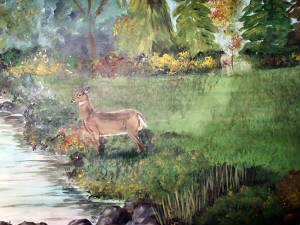
Bhagat Kabeer Ji says that there is a weak deer in a thick forest that has a beautiful pond and green vegetation. Such conditions as described above are every deer’s heaven. What more can a deer ask for but abundance of green vegetation (food for them) and a pond for water?

The next pankiti however adds another dimension to this. Amidst such beautiful atmosphere, the weak deer is being chased by hundreds of thousands of hunters. How long can the deer survive in such atmosphere (kaetha bancho kaal)? Not too long.

Deer is the jeev (jeev-aatma who has taken birth as human) while all the green vegetation and the pond is this world. Thousands of hunters are different kinds of dangers that this jeev faces everyday. How long can this jeev live in this supposedly beautiful world and enjoy the fruits of it? The answer is very short period of time.

Since this jeev is here only temporarily, why should it indulge in the pleasures of this world?

Waheguru Ji Ka Khalsa Waheguru Ji Ki Fateh

Tuesday, April 04, 2006

True Beauty

Waheguru Ji Ka Khalsa Waheguru Ji Ki Fateh

Lately I have seen alot of posts on forums and blogs about Marriage. The main problem is that alot of us have forgotten what true beauty is. We always describe something as beautiful based on it's external appearance rather than it's internal appearance. The saying "don't judge a book by it's cover" is so true.

Sadly alot of us know this, however we still fall into this trap. May Maharaj open our eyes. I have typed up a sakhi about Sri Guru Har Krishan Sahib Ji Maharaj and a leper, which relates to this. Please take the time to read it:

One day Guru Har Krishan Sahib Ji Maharaj went out on horse back to visit some neighbouring places. People came with simple and humble offerings.

But far apart from everyone stood a man as if he was afraid to come close to Maharaj. He was carrying on his body the dreadful malady, the living death that sucks out the vital fluid from the human body, eats away the joy of life and renders him horrible and loathsome. He was a leper.

Guru Hari Krishan Ji Maharaj looked at him with compassion and friendly sympathy. The young Guru not only carried the burden of human sorrow in his heart but also strength of action and power of healing. In a gesture of bestowing his loving mercy on the leper he placed his hand on his head, bent low by humiliating suffering.

He spoke to him with such deep concern and sympathy, that the leper was amazed at the gentleness and grandeur of Guru Sahib's compassion and concern for him. For the first time in his life he heard anyone having some faith in the hidden dignity of his soul. Guru Ji's words awakened a new consciousness and a new power within him.

On meeting and seeing the radiant face of Guru Ji, who was bringing with warmths and mercy for him, he felt he had changed from within. He regained his inner strength, confidence and will to live with his face turned away from the darkness of life. He felt that he was only a wounded soldier who had allowed his wounds to become festering sore.

The malady had made him forget that he was a soldier in the battlefield of life and he must fight for glory and victory without caring for his body. Now God had sent him the Supreme Healer, who had within him an infinite power to cure the moral, spiritual and physical deformities of men like him. The leper felt greatly exalted morally and spiritually. His inherent virtues of humility, and the courage to suffer with patience now became sources of strength, He felt greatly relieved when Guru Har Krishan assured him that he had a beautiful soul.

And now, when that soul was filled with the Light of Divine Power, the leper felt and visibly saw that many people who were dressed in glamorous clothes, and were physically attractive outwardly were plagued with unbelief, cowardice, selfishness, cruelty. He was much better than these sinful and distorted souls. With his awakened consciousness, he could see many people in robust health slowly dying with cancerous maladies in their souls. The new fount of spiritual power opened within his heart discharged a new healing energy, with which his leprosy began to heal and disappear.

Kavi Santokh Singh writes: "Guru Har Krishan dispelled people's sorrows, fulfilled their ambitions, imparted to the Light of True Name of God, He erased evil from the mind of the people and inspired them with patience righteousness and charity. Thus Sikhism flowered and illumined the hearts of the seekers. From distant lands devotees came to seek his benediction and healing touch. He cheered them up and removed their affliction."
Waheguru Ji Ka Khalsa Waheguru Ji Ki Fateh

Monday, April 03, 2006

"Our work in this world has to be much bigger than ourselves"

Waheguru Ji Ka Khalsa Waheguru Ji Ki Fateh

One militant affiliated with the Khalistan Liberation Force took a typically universalist view of the Sikh struggle for justice when he pointed to a portrait ofGuru Tegh Bahadur, the ninth Guru, who was said to have been martyred for the right of Hindus to worship freely:

That's Guru Tegh Bahadur. His story is so beautiful, because he sacrificed his life for the sake of another religion, for Hindus. At that time they were being persecuted by the Mughals. That's really an inspirtation to me.
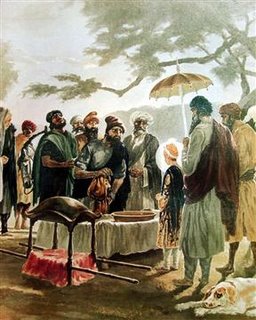
That's why I think Sikhs are in the world, not just for Sikhs alone but for anybody who needs a Sikh. Honestly, deep in my heart I feel like our work in this world has to be much bigger than ourselves.

Some of my friends say when Khalistan is established then we'll be able to kick back and relax! But I say no, the work is just getting started. You have your country but then you need to work on achieving justice in it and then in the rest of the world.

All these wars that are going on today, people are demanding justice at all costs. Bosnia is a clear-cut case. We have to not only be more peaceful in spirit, but we have to be willing to sacrifice our lives. The United Nations doesn't really have any power because there aren't enough parents willing to sacrifice their sons. It's all just a big hoopla.

If there is injustice and somebody in Somalia isn't getting food, the United Nations should be able to take care of it. When Khalistan is established if I have any say I will send 500, 1,000, 5,000 Sikhs right away. You don't get peace and justice without sacrifice and our Gurus taught us all about that.

Taken From: Fighting for Faith and Nation by Cynthia Keppley Mahmood

Waheguru Ji Ka Khalsa Waheguru Ji Ki Fateh

Saturday, April 01, 2006

feel rabaabee baladh pakhaavaj kooaa thaal bajaavai

Waheguru Ji Ka Khalsa Waheguru Ji Ki Fateh

This Shabad is by Bhagat Kabeer Ji in Raag Aasaa on Ang 477

Aasaa:
feel rabaabee baladh pakhaavaj kooaa thaal bajaavai
The elephant is the guitar player, the ox is the drummer, and the crow plays the cymbals.
pehir cholanaa gadhehaa naachai bhaisaa bhagath karaavai 1
Putting on the skirt, the donkey dances around, and the water buffalo performs devotional worship. 1
raajaa raam kakareeaa barae pakaaeae
The Lord, the King, has cooked the cakes of ice,
kinai boojhanehaarai khaaeae 1 rehaao
but only the rare man of understanding eats them. 1Pause
bait(h) si(n)gh ghar paan lagaavai ghees galourae liaavai
Sitting in his den, the lion prepares the betel leaves, and the muskrat brings the betel nuts.
ghar ghar musaree ma(n)gal gaavehi kashhooaa sa(n)kh bajaavai 2
Going from house to house, the mouse sings the songs of joy, and the turtle blows on the conch-shell. 2
ba(n)s ko pooth beeaahan chaliaa sueinae ma(n)ddap shhaaeae
The son of the sterile woman goes to get married, and the golden canopy is spread out for him.
roop ka(n)niaa su(n)dhar baedhhee sasai si(n)gh gun gaaeae 3
He marries a beautiful and enticing young woman; the rabbit and the lion sing their praises. 3
kehath kabeer sunahu rae sa(n)thahu keettee parabath khaaeiaa
Says Kabeer, listen, O Saints - the ant has eaten the mountain.
kashhooaa kehai a(n)gaar bh loro lookee sabadh sunaaeiaa 46
The turtle says, ""I need a burning coal, also."" Listen to this mystery of the Shabad. 46

Bhagat Kabir Ji in this shabad is doing a comparison of his spiritual state - Past Vs Present.
He gives some extreme examples to show the difference of his spiritual state.
His elephant like mann (mind) is now playing Rabab (a musical instrument like Guitar), his oxen like mann has become pakhavaj i.e. one that plays tabla and his crow like mind is also playing drum like instrument.
Elephant is known for being full of ego and kaam, Oxen is known for being lazy and crow is known for being selfish and greedy. Bhagat jee says that his Mind with these bad qualities now sings praises of Waheguru.
His lion like mann that was dangerous and violent has now become a servant serving others (serving paan etc). His tortoise like mann that used to be scared of going out (in satsangat) has now lost fear and is preaching others in Satsangat. Same way other examples are given to prove how his mann has elevated from a very low condition to a high spiritual state.

Waheguru Ji Ka Khalsa Waheguru Ji Ki Fateh