Waheguru Ji Ka Khalsa Waheguru Ji Ki Fateh
JANGNAMA
"Jangnama" is an eye-witness account of Ahmed Shah Durrani's invasion of 1764of which our knowledge is extremely poor otherwise. The eye-witness was Nur Muhanmmed, a domicile of Ganjuba in Baluchistan who held the post of Qazi, which he inherited from his father Abd - ullah Hilwar of Ganjuba. He had some pretentions to being a man of learning, a scholar of Persian and a learned poet. His fame as a man of letters travelled to the city of Kalat, and the ruler of that place, Mir Abdullah Khan asked him to compile a book of his poetry. The sugges- tion appealed to him and he decided to compose an epic to extol the achievements of Abdull-ah Khan.The decision, however, had to be abandoned, perhaps because of the death of Khan. In 1761, he went to Kalat; understandably to get some favours now from Nasir Khan, who had succeeded Abdullah Khan and was seriously thinking of leading a crusade against the Sikhs whose power was increasing, thereby causing anxiety to Ahmed Shah Durrani and the Balu-chis . Nur Muhammed now offered to accompany Nasir Khan on his contemplated expedition provided the Khan promised him the post of Qazi in Shikarpore or the Deras. Durrani on his return from Punjab bestowed these territories upon him as a reward for his services. And the Qazi, on his part, undertook to write an account of the Khan's exploits on his holy mission. Nasir Khan accepted his offer and he accompanied the expeditionary force which joined the forces of Ahmed Shah Durrani in the winter of 1764. He was thus an eye-witness to all engage-ments and his narration of events is based on his personal observations.
On his return to Ganjuba on the conclusion of the expedition, Nur Muhammed completed the Jang Namah towards the close of Al-Hijari corresponding to about June 1765.The work consists of 55 statements called "Bian" in Persian - each dealing with some event, personality, racial group, tactics of war, or the behaviour of the Sikhs.The author has a strong prejudice against the Sikhs whom he remembers in no better words than dogs, dog of hell, pig eaters, accursed infidels, dirty idolators, fire worshippers, etc., yet his account of the character of the Sikhs of the eighteenth century is simply invaluable to the students of history.
The author is lavish in praise of his mentor and the crusades - both Baluchis and Pathans, sometimes depriving the historical narrative of its objectivity. Further, he reserves a strong hatred for the Sikhs. All these things minimize the historical value of the work. Yet, inspite of this , it is a very valuable and correct corroboration in respect of their struggle against the Afghani invaders, the desecration by the Durranis of their holy tank and temple, the Darbar Sahib (Golden Temple) at Amritsar and the martyrdom of Baba Gurbakhsh Singh Shaheed with his band of 30 Sikhs who valiantly challenged an army of 30,000 Afghanis and Baluchis and sacrificed their lives at the altar of their faith.
It is from the Jang Namah alone that we learn that the Sikhs under the Bhangis had crossed the Indus and had extended their conquest as far as Multan and Deras by the middle of 1764 in a few months after the conquest of Sirhind. Moreover, Jang Namah is the only detailed account, known to us, of the seventh invasion of Punjab by Ahmed Shah Durrani.So far as the Sikhs are concerned Jang Namah is an invaluable source of information. It visualises Sikhism and Sikh society as a separate entity, different from Hinduism.The conviction of Nur Muham-med was fully shared by his mentors, and perhaps, this was the reason that Ahmed Shah Abdali's anger was directed against Darbar Sahib which was the chief source of inspiration to the Sikhs.The Sikhs offered resistance to Ahmed Shah Abdali in the manner that evoked praise even in the hearts of their detractors. Nur Muhammed inspite of his sympathy for his comrades-in-faith and hatred for the Sikhs could not help describing their excellent conduct, their experience in battlefield, their liberality and their valour, intrepedity, agility and grand physical appearance. This he did most probably to impress upon the soldiers of the invading armies that Sikhs were strong enough to withstand their onslaught because in moral conduct they were excellent and none surpassed them.In his account, he dwells on the qualities of the Sikhs about which every Sikh should feel proud. We present a liberal translation of Qazi Nur Muhammed's narration which elucidates their (Sikhs) high conduct, their mode of fighting, their faith and courage, etc:
"Do not call the dogs (the Sikhs) dogs, because they are lions (and) are courageous like lions in the battlefield. How can a hero, who roars like a lion be called a dog? (Moreover) like lions they spread terror in the field of battle. If you wish to learn the art of war, come face to face with them in the battlefield. They will demonstrate it (art of war) to you in such a way that one and all will shower praise on them. If you wish to learn the science of war, O swordsman, learn from them. They advance at the enemy boldly and come back safely after action. Understand, Singh is their title, a form of address for them. It is not justice to call them dogs; if you do not know Hindustani language, then understand that the word 'Singh' means a lion."Truly, they are lion in battle, and at times of peace, they surpass "Hatim" (in generosity ). When they take the Indian sword in their hands they traverse the country from Hind to Sind. None can stand against them in battle, howsoever strong he may be. When they handle the spear, they shatter the ranks of the enemy. When they raise the heads of their spears towa-rds the sky, they would pierce even through the Caucasus (in the process). When the adjust the strings of the bows, place in them the enemy killing arrows (and) pull the strings to their ears, the body of the enemy begins to shiver with fear. When their battle axes fall upon the armour of their opponents, their armour becomes their coffin. "The body of every one of them is like a piece of rock and in physical grandeur everyone of them is more than fifty men. It is said that Behram Gore killed wild asses and lions. But if he were to come face to face with them even he would bow before them (Singhs). Besides usual arms, they take their guns in hand (and) come into the field of action jumping (and) roaring like lions and raise slogans. They tear asunder the chests of many and shed blood of several (of their enemy) in the dust. You say that musket is a weapon of ancient times, it appears to be a creation of these dogs rather than Socrates. Who else than these (dogs) can be adept in the use of muskets. They do not bother (even if) there are innumerable muskets. To the right and the left, in front and towards the back, they go on operating hundreds of muskets angrily and regularly."If you do not believe in what I say, you may enquire of the brave swordsmen who would tell you more than myself and would praise them for their fighting. This bears witness to (my statement) that they faced thirty thousand heroes in the battlefield. If their armies take to flight, it is a war tactics of theirs. They resort to this deception in order to make the angry army grow bold and run in their pursuit. When they find them separated from the main body and away from help and reinforcement, they at once turn back and fight more ferociously (literal translation - they set fire even to water)."Did you not see that while fighting the Pathans, they took to flight which was deceptive. A world famous wrestler wielding high esteem and respect alight-ed from his horse and showed his great style as if he were Tuhmatan ( a great warrior of Iran). O valiant fighter, do justice to their (act of ) war. One of their armies invaded Multan and put the city to plunder and devastation and killed many of its inhabitants and carried away an immense booty. I am not sufficiently strong in mind to express what the dogs did there. But as God willed it, each of us has to submit to His Will."Besides their fighting, listen to one more thing in which they excell all other warriors. They never kill a coward who is running away from the battlefield. They do not rob a woman of her wealth or ornaments whether she is rich or a servant ("Kaneez"). There is no adultry among these dogs, nor are they mischieveous people. A woman, whether young or old, they call a "Burhi". The word Burhi, means in Indian language, an old lady. There is no thief amongst these dogs, nor is there amongst them any mean people. They do not keep company with adulters and house thiefs though all their acts may not be commendable."If you are not acquainted with their religion, I tell you that the Sikhs are the disciples of the Guru - that glorious Guru lived at Chak (Amritsar). The ways and manners of these people were laid down by Nanak who showed these Sikhs a separate path. He was succeeded by Guru Gobind Singh from whom they received the title of Singh. They are not part of the Hindus, who have a separate religion of their own. "Now that you have familiarised yourself with the behaviour of the Sikhs, you may also know something about their country. They have divided the Punjab amongst themselves and have bestowed it upon every young and old."
Professor Surjit Singh Gandhi
Waheguru Ji Ka Khalsa Waheguru Ji Ki Fateh

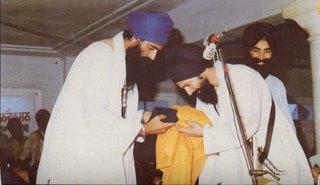
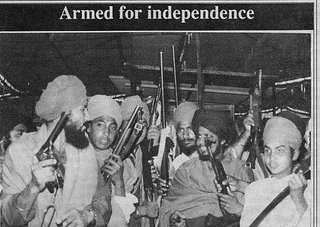
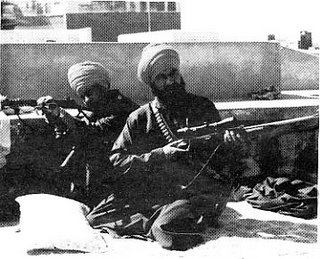
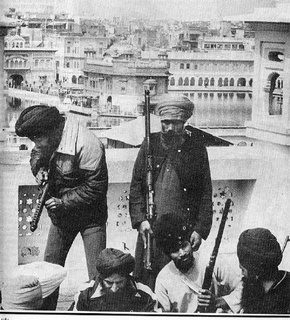
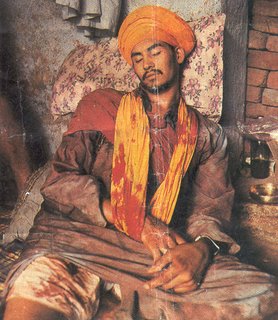


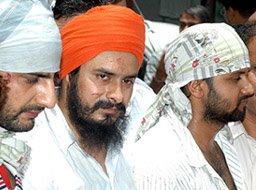
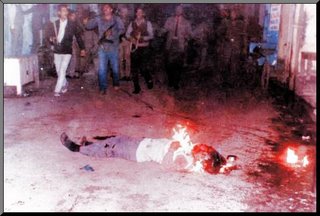
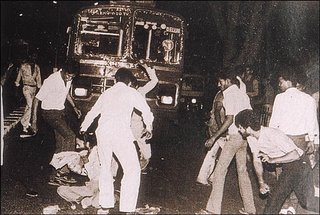
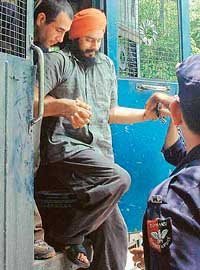 The victims of 1984 riots have repeatedly pleaded for justice but in vain. Sikh youngsters are rotting in jails for over 10 years as their cases progress at a snails pace. Instead, the perpetrators of the riots have been made MPs and MLAs.
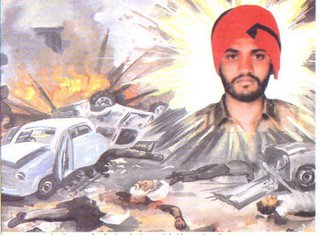 Letter to a Judge, September 9, 1998 - Bhai Jagtar Singh Hawara
 AT LAST THE day came, It was 6 P.M. on 4th October, 1930. The news of my release was announced and everyone was very happy about it. I was sitting in a blissful solitude within my cell. All the patriots rushed towards my cell to break the news to me and congratulate me. The first to come and congratulate me was Bhai Gajjan Singh (Master). In a matter of minutes other patriots gathered around me and read joyfully the orders of release. I was overwhelmed not so much by the joy of release as by the separation I would have to bear from devoted friends like Bhai Kartar Singh (of Canada). I was overwhelmed by these dual emotions of joy and sorrow when friends came to bid good-bye with loving embraces. The prison officials stood there ready to carry out the order of my release but my feet were reluctant to move away from such dear companions. I embraced everyone of them and after a few affectionate words with each one of them, I left them all with tears in their eyes. The stream separated from the river at last.
 So saying, he sent a prison-warder with me and ordered him to permit us to have an unrestricted meeting. Bhagat Singh was taking his daily stroll in the prison compound. He had been told about the permission granted for this meeting. On seeing me he came running towards me. I was standing outside the fence of the courtyard. He came close to the fence and greeted me with great love and affection, bowing low out of reverence. I also folded my hands and greeted him warmly. The warder moved away when we were together. Even the policemen on duty in the compound kept away from us. We were all alone facing each other.
 Bhagat Singh: Actually, I did not murder Saunders. I was of course accused of having murdered him. I considered it a great heroic deed and so took the credit for it. I confessed that I killed Saunders. Whether there was any benefit in it or not, I nevertheless got the credit for the whole deed. Even otherwise there was no escape for me.
 I: On judging what you have said, my dear Bhagat Singh, your ideal of patriotism is very low and frippery. To make such a show of patriotism and service to the country for personal glory is cheap chauvinism and vain jingoism. The patriots of 1914-15 movement suffered and served the country keeping only the selfless service of the motherland in view. They did not have the slightest thought of such cheap publicity and never even in a dream had any ambition of personal glory. It is only in the company of petty minded and evil-motived people that your mind was misled into such vain thoughts of personal glory. The seeking of eminence through newspapers, and honor and glory through propaganda are all superficial things about which it is rightly said in the Guru-Granth Sahib:
 I: I am very happy that you have revealed the truth of your inner state of mind and have not concealed what is really in your heart. It is absolutely useless to keep religious symbols like hair and beard while you are an atheist at heart, nor would I be proud of making you do such a thing. I am no more anxious about your coming back to Sikh forms, nor am I sorry that you do not have hair and beard. My only anxiety and wish now is that you should die with faith in God. You will definitely die on the scaffold. It would have been better if your atheism had disappeared before you faced death sentence. Even though you are an atheist remember one thing that you will not die, keep it engraved in your heart that you will not die. You will be born again. Your soul is immortal and ageless. It will never be destroyed. It will be born again and again. Know this for dead certain that you will not die. You will take human birth again. Look within and see what you are? Are you a soul, a spirit (Atmo) or just a lump of flesh and blood? Do you think that this self within you which speaks, understands, thinks, reflects on serving humanity and expires after doing great deeds, is nothing beyond bones, blood and flesh and do you think it will end with the end of the body? No, never. Your real self will not be destroyed and you will never die".
 I helped him to stand up and when he had regained control over himself he said "Your words have pierced my heart like an arrow, my disbelief and faithlessness have been terribly shaken, a magnetic influence has changed my inner being. Deep down in my heart now I believe that I will not die and this belief will remain unshaken in my mind, speech and actions. I am that Spirit that death will not destroy. I will not die. After I give up my body I will be born again. Until my new birth my Atma will remain in everlasting glory. When I die on the scaffold I will die with a great spiritual joy. I was brave through sheer will power and asserted that I did not care for death. Within my heart was the deep hidden sorrow of complete extinction after death. Whenever this thought came to mind there was darkness before my mind. The thought of being reduced to nothingness after death created a painful void within my heart. Your words have brought a miraculous change in me. I can now see my future clearly in the light of new consciousness you have given me. The void created by the thoughts of extinction have disappeared. All doubts and delusions have been dispelled.
 After this significant end of our meeting we greeted each other and parted in blissful silence. It was quite dark now. I was taken to the office from where I was given unconditional release and sent out of the prison under cover of darkness. I boarded the train from Lahore railway station and came to Amritsar. From Amritsar railway station I walked to the Golden Temple. A Government servant had been given to me to help me in my journey. He carried my bag and bedding and attended to all my needs. Near the clock tower the servant waited with my luggage while I went inside and had a dip in the holy tank. It was 1 A.M. There I sat in peaceful solitude meditating on His Name. I enjoyed this solitude very much. After meditation, I had a mind to meet some friends. But on second thought I wanted to keep this pilgrimage to the Golden Temple, a secret. I knew that if I met some friends there will be unnecessary noise of jubilation about the release and a good deal of trumpeting through processions. I was tempted many times to go and meet Gyani Nahar Singh and Gyani Harbhajan Singh in the Malwai Bunga, but I overcame the temptation. Uptil day break I enjoyed the divine Kirtan of the Golden Temple. Then quietly I slipped out of Amritsar and resumed my journey to Ludhiana.
 Taken from Autobiography of Bhai Sahib Bhai Randhir Singh Ji - Meeting with Bhagat Singh, Whe Great Patriot - Chapter 25
 "Sant Jarnail Singh Bhindranwale was a truthful, devout saint-soldier of the tenth Guru. He was not of a type who would care for his safety or security, but he was so much immersed in the love of Guru that he devoted his whole self to the preaching of Sikhism. "
 "Our sixth Guru, Guru Hargobind, and our tenth Guru Gobind Singh, raised their voices against tyranny and had to raise their swords, too. In the same way Sant Jarnail Singh Bhindranwale raised his voice and took out his sword. Sant Jarnail Singh Bhindranwale courageously tread on the path of the best Sikh traditions and values."
 After I met Sant Bhindranwale, my son asked me, "How many weapons did Santji have, what kind of weapons did he have?"
 The first thing I noticed about Bhindranwale was that he made everybody feel welcome.
 Dib has been derived from Sanskrit word – Divya - and it means divine, secret, occult etc. Drishtee means nazar, eye, seeing power etc.
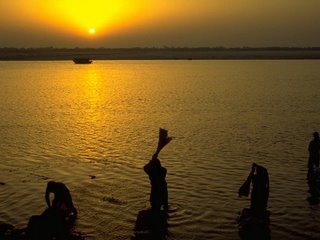 Sri Guru Ramdas Ji Maharaj uses a beautiful metaphor to explain the greatness of the true Guru. In India, Ganga water is considered to be very pure and sacred. Hindus worship Ganga and they believe that bathing in Ganga purifies them of their sins.
 Waheguru Ji Ka Khalsa Waheguru Ji Ki Fateh
  Deen means religion, duniya means the material world. “O” means and. Paree-Rukhsaar mean face like a fairy i.e. pariyaan varga sohna mooh.
 Waheguru Ji Ka Khalsa Waheguru Ji Ki Fateh

 Waheguru Ji Ka Khalsa Waheguru Ji Ki Fateh
 naaraaein neh simariou mohiou suaadh bikaar He does not remember the Lord in meditation; he is fascinated by the pleasures of corruption.
 A lecturer, when explaining stress management to an audience, raised aglass of water and asked, "How heavy is this glass of water?"